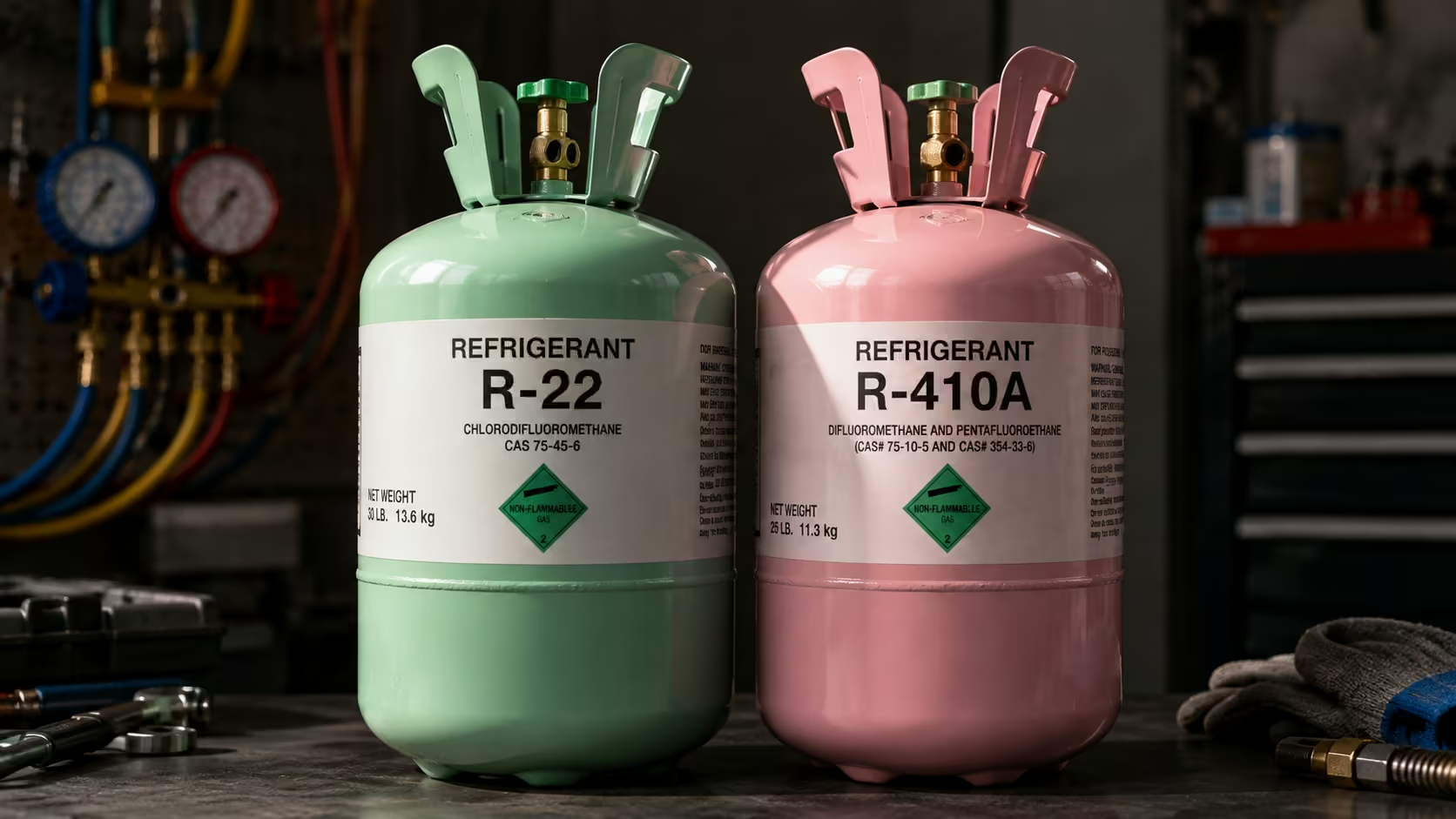

Homeowners and HVAC contractors keep hearing conflicting dates about the R-410A phase-out deadline. One article says January 2025. Another says January 2026. A third claims R-410A is already banned. This confusion is costing people money, because some contractors use it to push unnecessary system replacements.
The truth is simpler than the noise suggests. Federal rules, state rules, and product-type rules all move on different timelines, and the EPA itself changed its enforcement position in 2026. This guide breaks down exactly what applies to manufacturing, installation, and servicing, state by state, so a reader can check their own situation in under five minutes.
What the R-410A Phase-Out Actually Covers
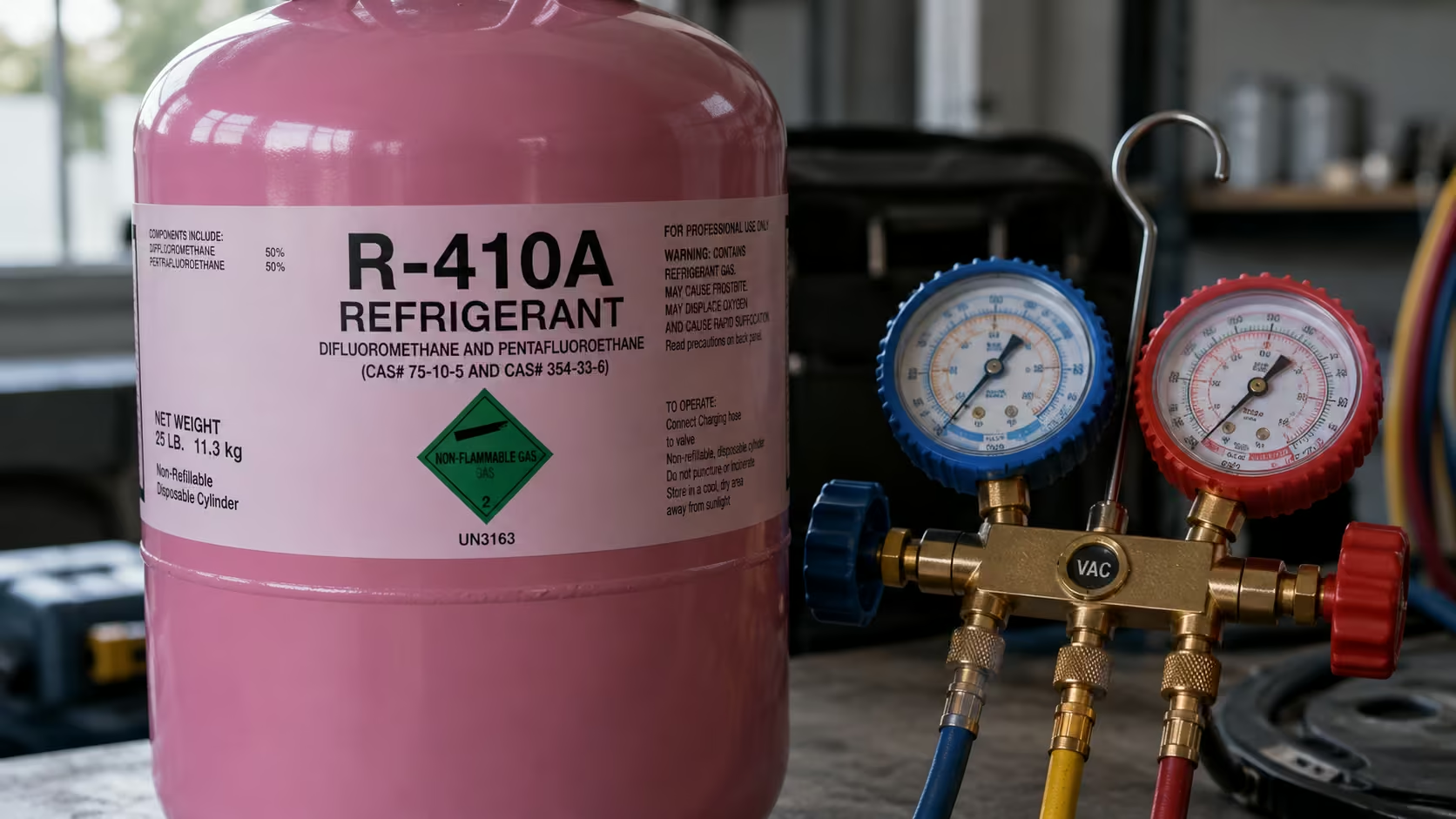
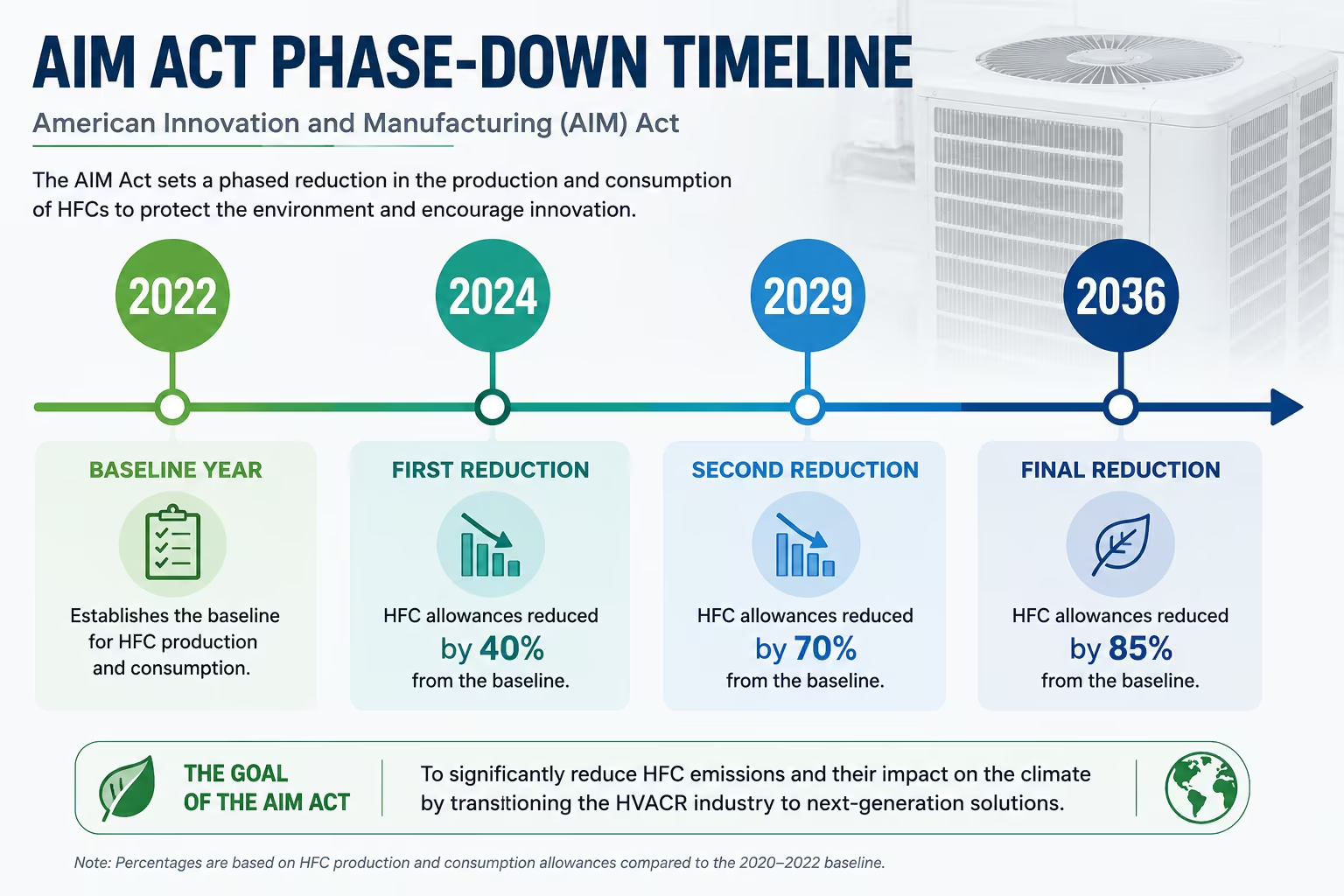
The phase-out is not a ban on refrigerant. It is a manufacturing restriction created under the American Innovation and Manufacturing (AIM) Act of 2020. The AIM Act gave the EPA authority to reduce HFC production nationwide, and R-410A is one of the refrigerants caught by that reduction because its global warming potential sits at roughly 2,088. For the full sector-by-sector schedule behind this rule, see our complete AIM Act refrigerant regulations guide.
Three separate dates matter here, and mixing them up is the single biggest source of confusion online. One date governs when factories could keep building R-410A equipment. A second governs when contractors could keep installing it. A third governs servicing, which has no end date at all under current federal policy.
Manufacturing Cutoff: January 1, 2025
Manufacturers lost the ability to build or import new residential split-system air conditioners and heat pumps using R-410A after January 1, 2025. This is the one firm, unchanged date in the whole timeline. Any R-410A split system sold today was built before that cutoff and is legally being sold from existing inventory.
Installation Rules: The 2026 EPA Reversal
This is where most confusion starts. The original rule set January 1, 2026, as the last day contractors could install pre-2025 R-410A split systems. Late in 2025, the EPA said it would deprioritize enforcement of that date, citing cost and supply concerns in the field.
On May 26, 2026, the EPA made it official with a final rule (effective July 27, 2026) allowing continued installation of pre-2025 R-410A equipment until existing supply runs out. Practically, that means a homeowner can still have a legally manufactured R-410A system installed today, unless their state has its own separate law, which brings us to the next section.
State-by-State: Where Federal Rules Don’t Apply
Federal enforcement leniency does not override state law. A handful of states have written their own refrigerant rules, and those states can be stricter than the EPA even after the 2026 federal reversal.
New York: The One Hard Deadline That Still Stands
New York passed a statewide law codifying the original January 1, 2026, installation deadline, independent of whatever the EPA decides. That means R-410A split systems cannot legally be installed in New York regardless of the federal rule change. Anyone in New York shopping for a new system needs to plan around R-454B or R-32 equipment now, not later.
California: Aligned for Now, Historically Stricter
California, through the California Air Resources Board, has generally kept its refrigerant rules aligned with federal requirements for residential HVAC. That alignment can change. California has a track record of moving ahead of the EPA on HFC policy, so homeowners there should treat the current alignment as temporary rather than permanent.
Other States
Most states have no independent refrigerant installation law and simply follow the federal EPA rule described above. That means the July 2026 enforcement reversal applies in full, and pre-2025 R-410A equipment can still go into homes as long as supply lasts. Contractors and builders should still confirm current status with their local Authority Having Jurisdiction before specifying equipment, since local codes can shift faster than this article can be updated.
Timeline Table: Every R-410A Deadline in One Place
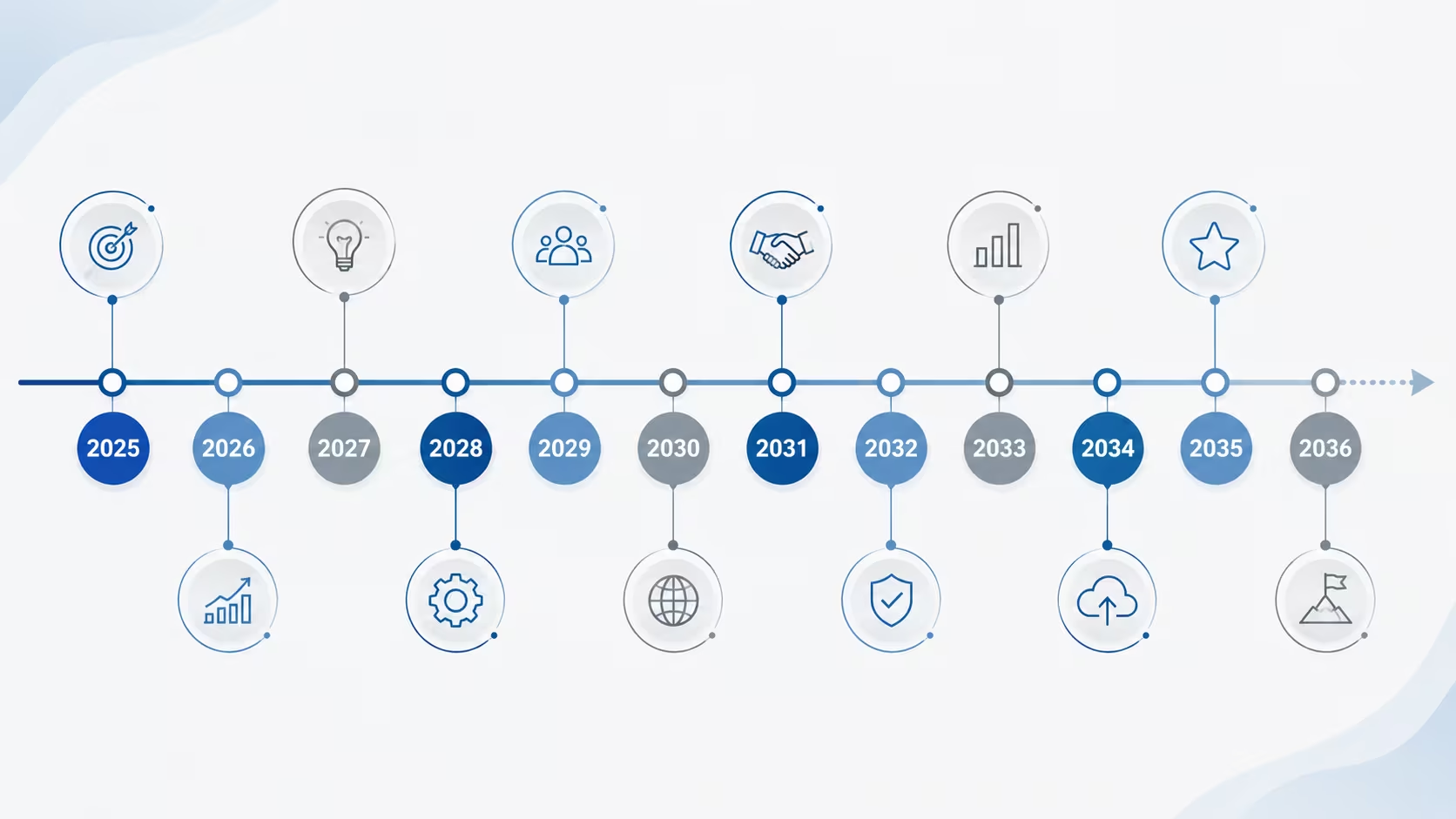
| Date | What Happens | Applies To |
|---|---|---|
| January 1, 2025 | Manufacturing and import of new R-410A split systems ends | Federal, nationwide |
| January 1, 2026 | Original installation deadline (now deprioritized federally) | Federal, but see New York |
| January 1, 2026 | Statewide installation deadline for R-410A split systems | New York only |
| May 26, 2026 | EPA publishes final rule allowing continued installation | Federal, nationwide |
| July 27, 2026 | Federal rule allowing continued installation takes effect | Federal, nationwide |
| January 1, 2028 | Manufacturing/import cutoff for packaged (self-contained) units | Federal, nationwide |
| 2036 | Target: 85% reduction in HFC production from baseline | Federal, nationwide |
What Happens to Systems Already Installed
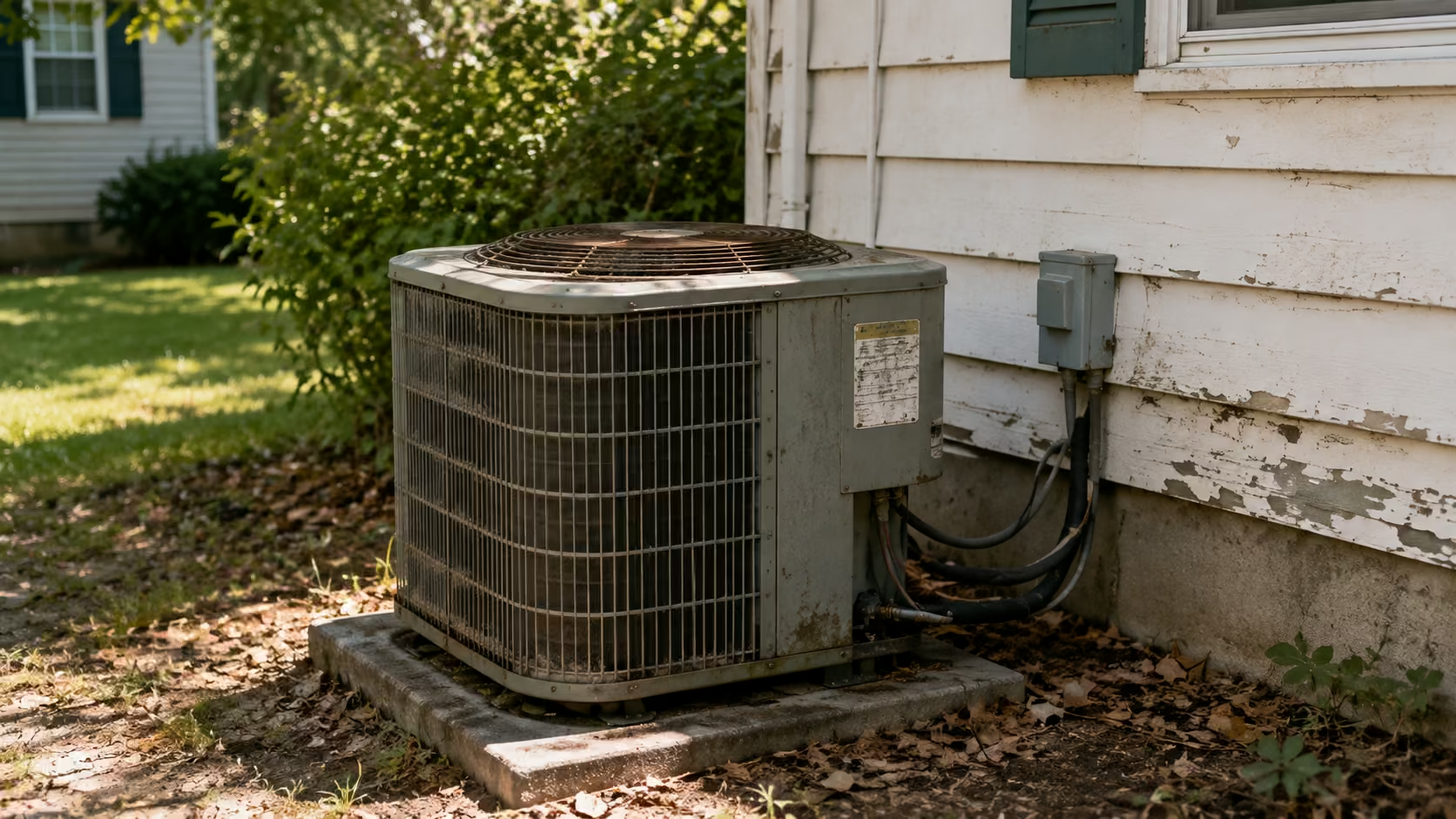
Nothing changes for a working R-410A system already in a home. The phase-out targets new manufacturing, not existing equipment. A system installed five years ago, or five months ago, can keep running for its full lifespan, typically 15 to 20 years with proper maintenance.
Servicing Has No Federal End Date
There is no deadline requiring anyone to stop servicing R-410A equipment. Reclaimed and recycled refrigerant will keep supplying repairs for years, following the same pattern R-22 followed after its 2020 production cutoff. The catch is price, not legality.
Repair Costs Will Keep Rising
R-410A wholesale pricing sat around $4 to $8 per pound in 2020. By the mid-2020s, installed pricing reached $50 to $100 per pound in many markets, an increase of roughly 375%. That trend mirrors R-22, which climbed from about $20 per pound to $150 to $250 per pound after its own phasedown. Anyone planning a repair budget should factor in refrigerant cost, not just labor.
You Cannot Retrofit an Old System
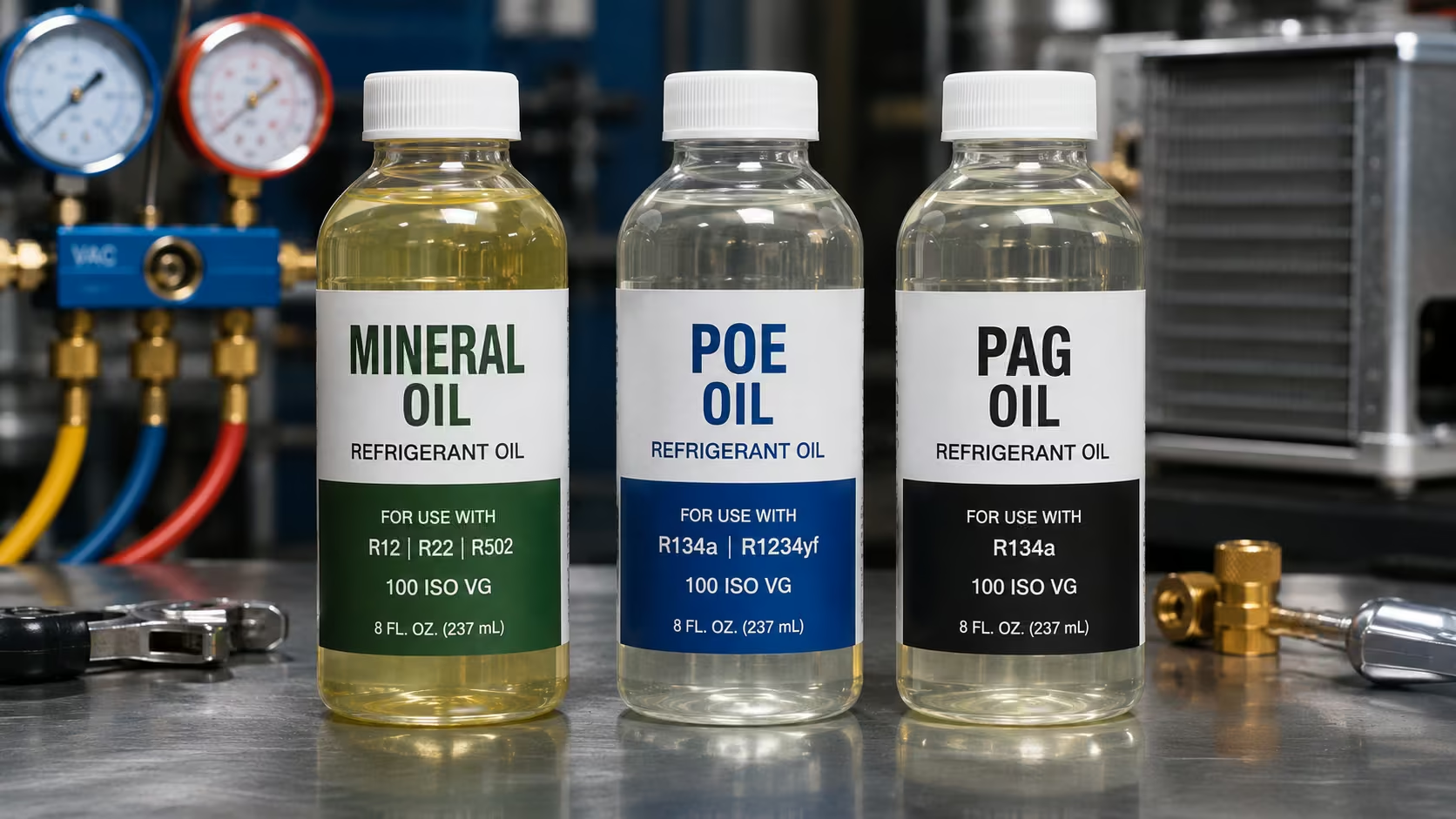
Retrofitting an existing R-410A system to run on R-454B or R-32 is not possible. The newer refrigerants operate at different pressures, need different lubricants, and require leak-detection sensors the old equipment does not have. The only path to the newer refrigerant is a full outdoor unit replacement, and often the indoor coil too.
Buying Decisions: What This Means Right Now

Someone shopping for HVAC equipment today faces three realistic paths, and the right one depends heavily on system age and budget, not just the phase-out calendar itself.
Buying Remaining R-410A Inventory
Some distributors still have pre-2025 R-410A equipment, sometimes discounted as inventory clears. The upside is lower upfront cost and a familiar, proven technology. The downside is rising future refrigerant costs and buying into a platform near the end of its production life.
Buying New A2L Equipment Now
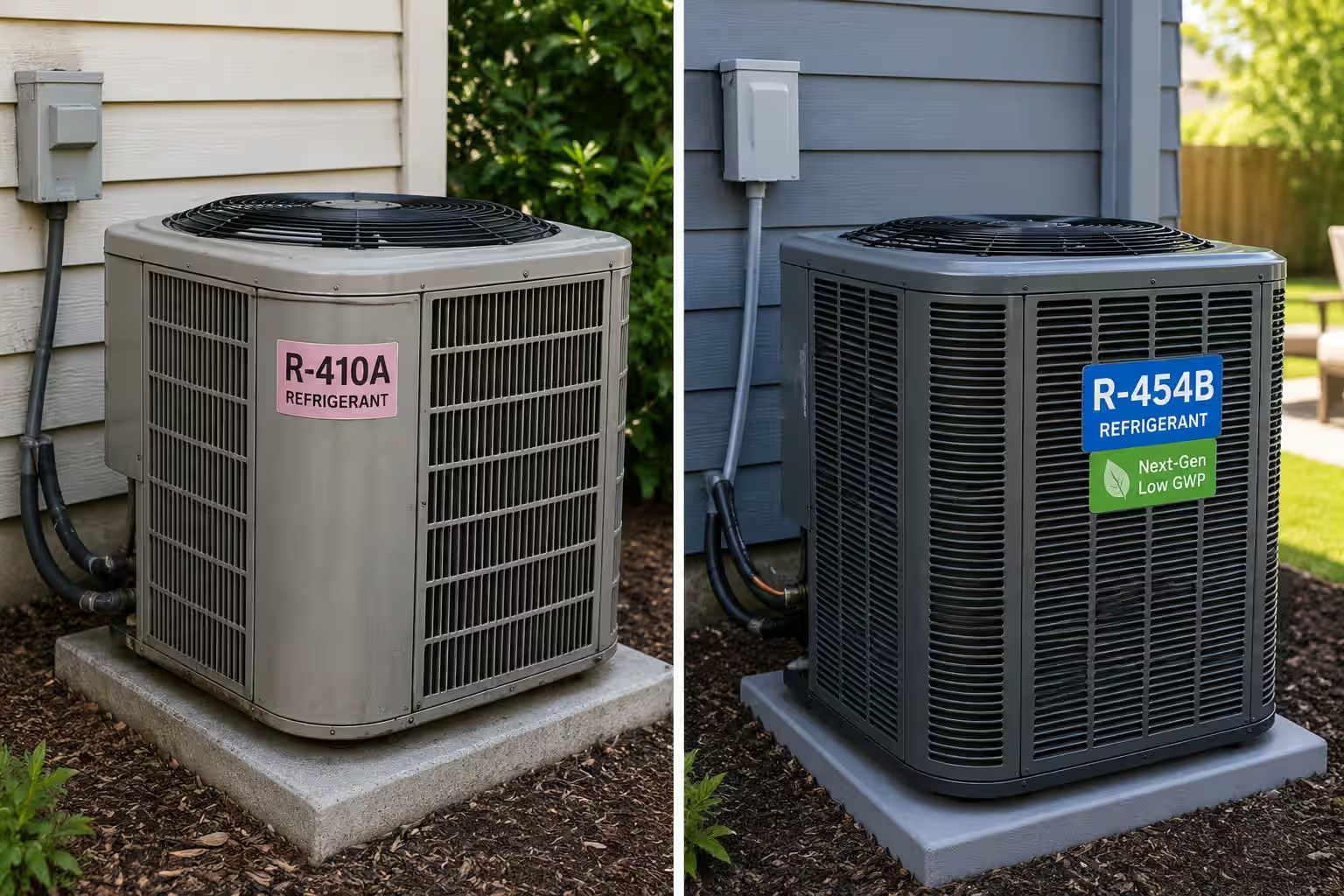
New equipment uses R-454B for most ducted residential and light commercial systems, and R-32 for many ductless mini-splits. Both are classified A2L under ASHRAE 34, meaning low toxicity and mild flammability. Pricing for A2L equipment runs roughly 10% to 15% higher than equivalent R-410A gear, largely due to new safety components like leak sensors.
Waiting for the Market to Mature
For homeowners with flexibility, waiting into late 2026 or 2027 lets the A2L supply chain settle further. Manufacturing issues typically shake out in the first two years of any transition, and pricing tends to stabilize as adoption scales.
How the AIM Act Fits the Bigger Picture
The R-410A phase-out is one piece of a much larger federal HFC reduction plan, covering commercial refrigeration and other refrigerant categories well beyond residential air conditioning.
The 2036 Target
Congress directed the EPA to cut HFC production and consumption by 85% from historic baseline levels by 2036, using a stepped schedule rather than a single cutoff. R-410A’s phase-out is one of the earliest and most visible pieces of that broader schedule, which is why it dominates headlines even though other refrigerants face similar timelines.
Kigali Amendment Alignment
The U.S. schedule under the AIM Act tracks the international Kigali Amendment to the Montreal Protocol, an agreement joined by more than 115 countries. That alignment matters for manufacturers building equipment for multiple markets, since it keeps U.S. compliance dates roughly synchronized with major trading partners. Anyone weighing a full system change instead of another repair can start with our guide to R-410A to R-454B conversion to see what a real transition actually involves.
Frequently Asked Questions
Is R-410A illegal to use now?
No. Existing R-410A systems can keep operating indefinitely, and the refrigerant can still be purchased for servicing. Only new manufacturing of R-410A split systems is restricted, and that restriction started January 1, 2025.
Can I still install a new R-410A air conditioner in 2026?
In most states, yes, as long as the equipment was manufactured before January 1, 2025, and supply lasts, following the EPA’s July 2026 enforcement rule. New York is the exception, since its state law bans new R-410A installations regardless of federal policy.
What refrigerant replaces R-410A?
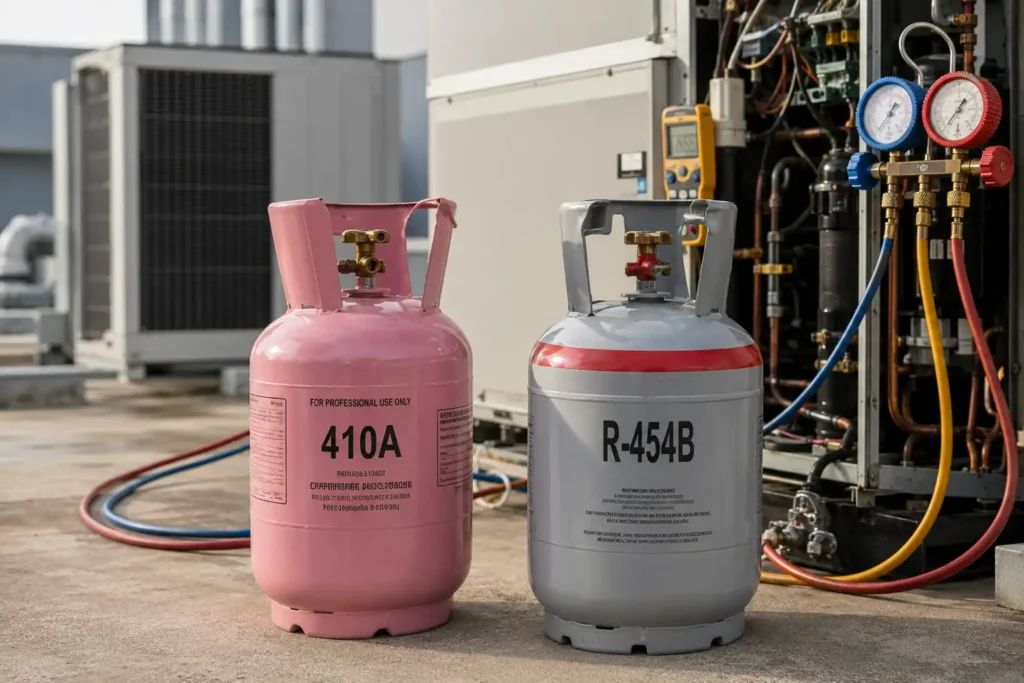
R-454B is the primary replacement for ducted residential and light commercial systems. R-32 is common in ductless mini-splits. Both are A2L refrigerants with significantly lower global warming potential than R-410A.
Will R-410A refrigerant still be available for repairs?
Yes, through reclaimed and recycled supply, but prices will keep climbing as production drops each year under the AIM Act schedule.
Do I need to replace my working R-410A system right away?
No. There is no requirement to replace functioning equipment. The phase-out affects new manufacturing, not systems already installed in homes or businesses.
Why did New York ban R-410A installation when the EPA didn’t?
States can pass refrigerant laws that are stricter than federal rules. New York codified the original 2026 deadline into state law before the EPA reversed its own enforcement position, so the state requirement still stands.
How much more expensive will R-410A repairs get?
Based on the R-22 precedent, prices could eventually reach $150 to $250 per pound or higher, though the exact timeline is uncertain. Current pricing already sits around $50 to $100 per pound installed in many markets.
Can my old system be retrofitted to use the new refrigerants?
No. R-454B and R-32 require different pressures, lubricants, and safety components that older R-410A equipment does not have. A full system replacement is the only path.
Conclusion
The R-410A phase-out deadline is not one date, it is a layered set of federal and state rules that shift depending on manufacturing, installation, and service. Manufacturing stopped for new split systems on January 1, 2025, installation stayed legal nationwide after the EPA’s mid-2026 reversal, and only New York has locked in a hard installation ban through its own state law.
For most homeowners, the practical takeaway is patience over panic. A working R-410A system does not need replacing today, and buying decisions should weigh system age, repair history, and local state law rather than headlines alone. For more refrigerant guides and resources, visit SmartRefrigerants.com.