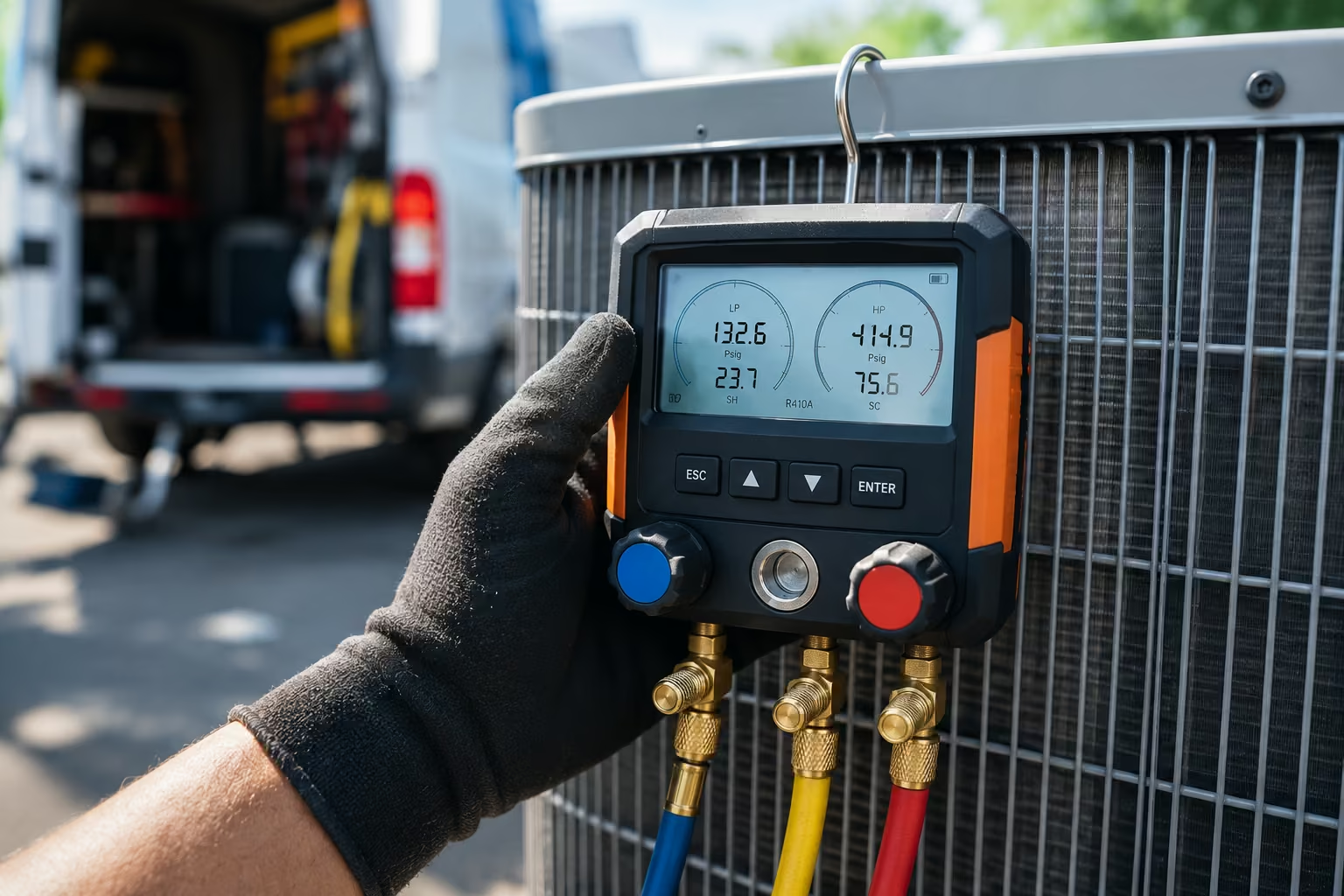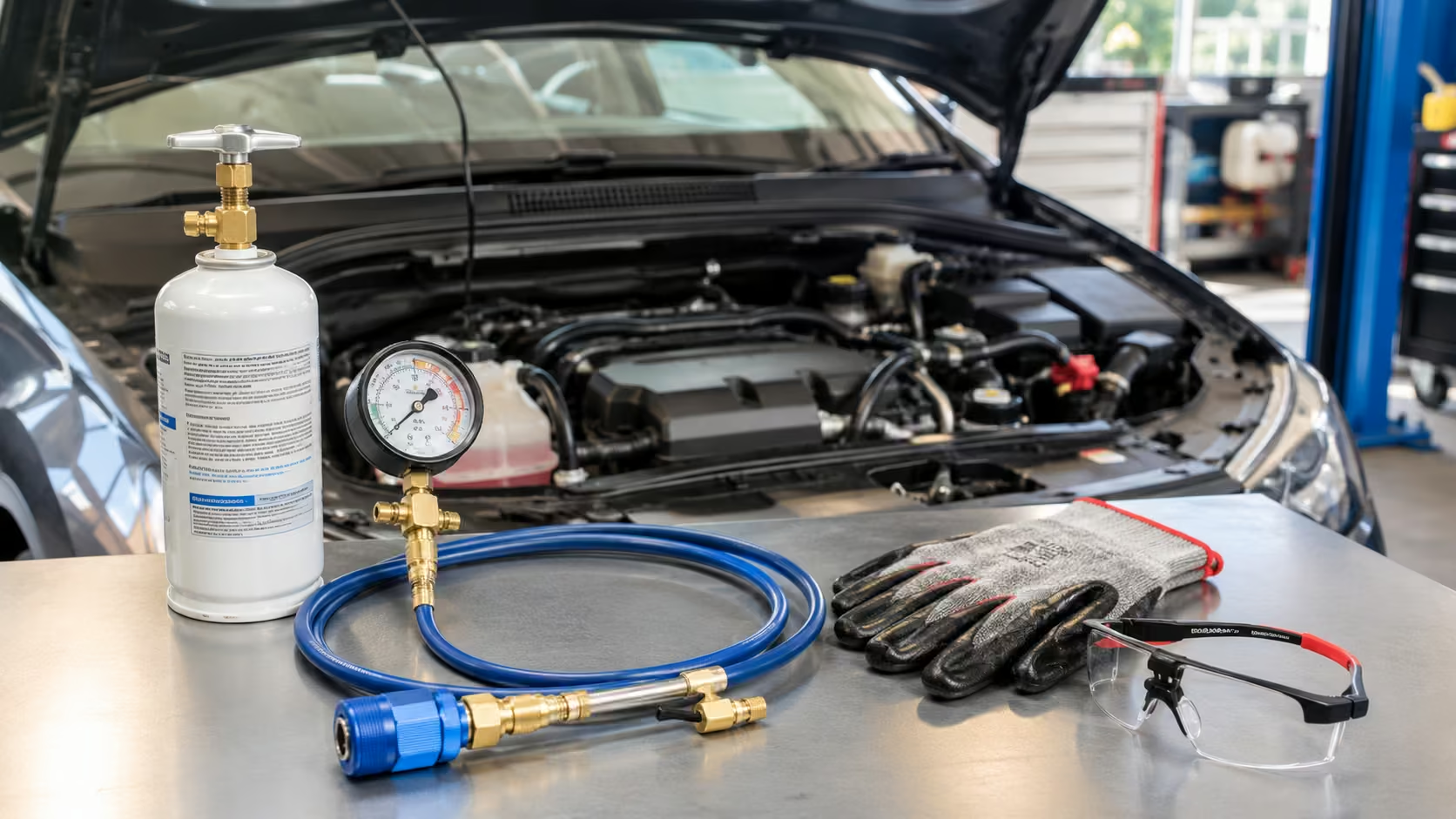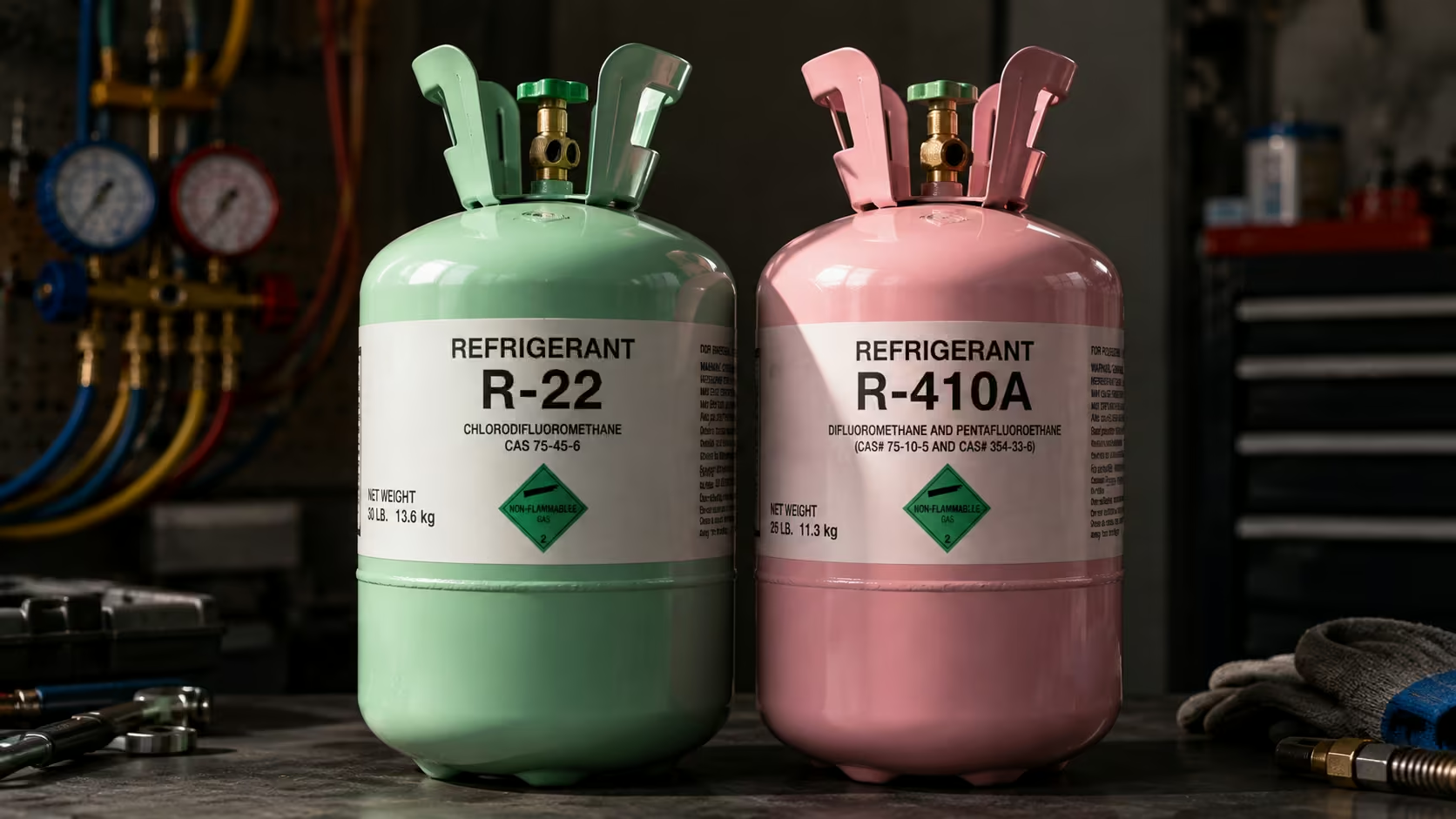

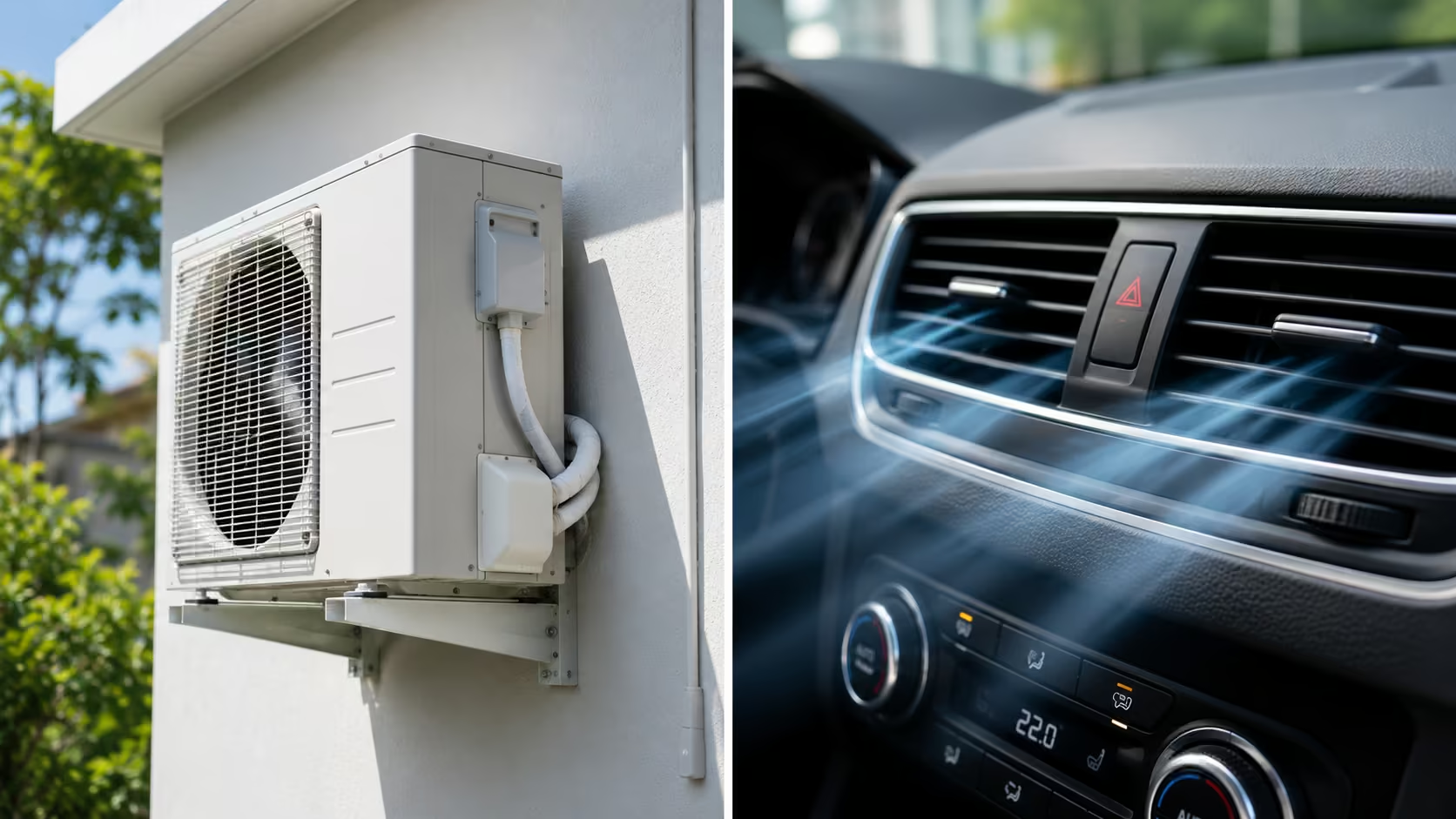
Shoppers researching R-32 vs R-1234yf often land here after seeing both names mentioned in the same breath about low-GWP refrigerants. That pairing is misleading. One of these refrigerants runs the mini-split cooling a living room. The other runs the air conditioner in a car. They almost never compete for the same job.
This guide clears up the confusion, compares the real properties side by side, and explains exactly why R-32 dominates ductless mini-split systems while R-1234yf stays in the automotive lane.
Two Refrigerants Built for Different Industries
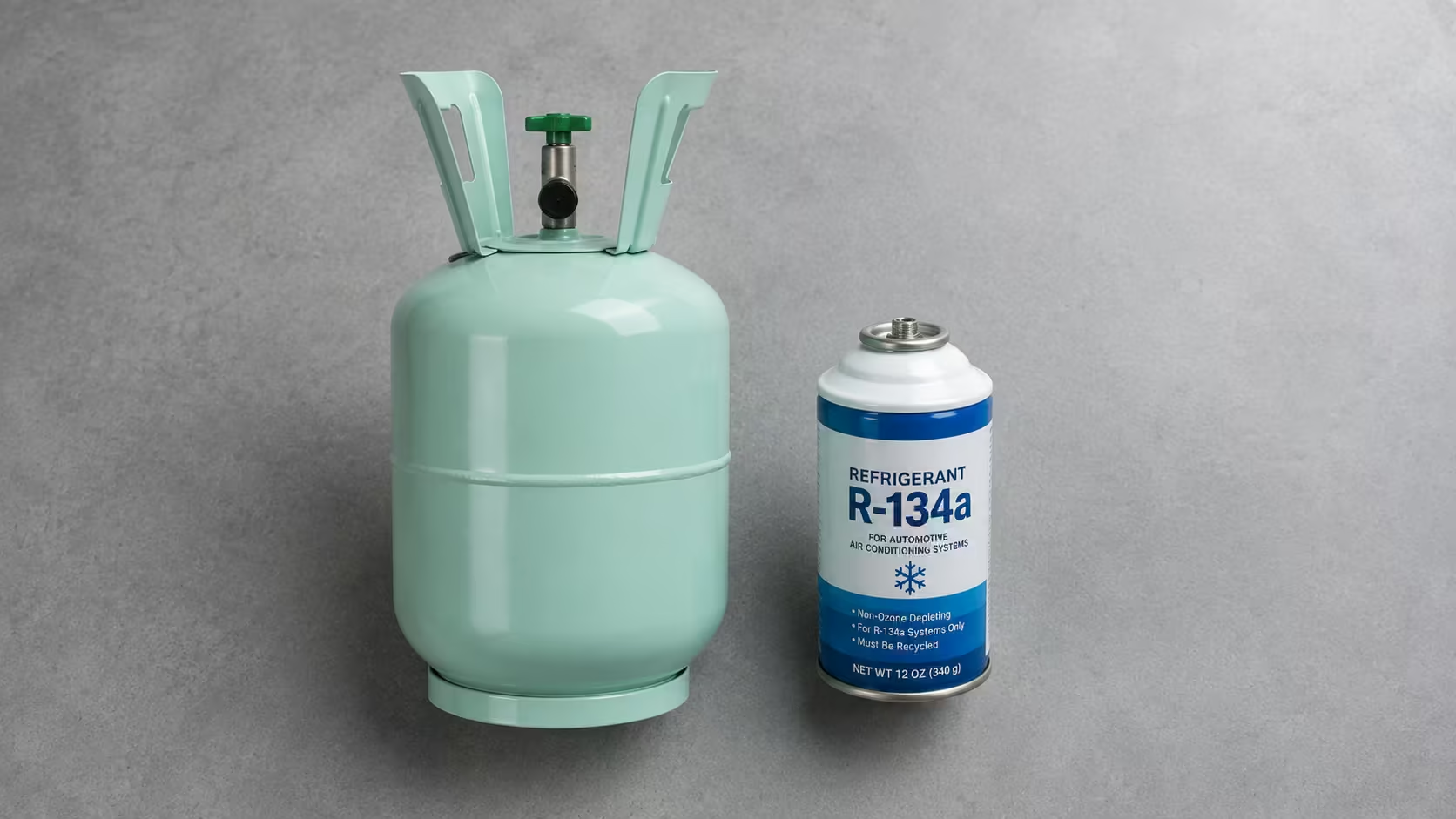
The confusion around R-32 vs R-1234yf usually comes from both being labeled “next-generation” and “low-GWP” in marketing material. Underneath that shared branding, their chemistry and their intended use diverge almost completely.
R-32: The Mini-Split and VRF Standard
R-32, also called HFC-32 or difluoromethane, is a single-component refrigerant with a GWP of 675. It has become the default refrigerant for ductless mini-splits and VRF (variable refrigerant flow) systems worldwide, with Daikin alone estimating more than 100 million R-32 units in service. Because it is a single compound rather than a blend, R-32 has zero temperature glide, which simplifies system design and service diagnostics.
R-1234yf: The Automotive AC Standard
R-1234yf, or HFO-1234yf, is a hydrofluoroolefin developed specifically to replace R-134a in vehicle air conditioning. Its GWP sits at just 4, dramatically lower than R-32’s 675, but that number reflects a completely different design goal: automotive mobile air conditioning (MAC) systems, not stationary home comfort equipment. It has become standard across new vehicles from Ford, GM, Toyota, BMW, Honda, and most other major automakers.
Full Property Comparison
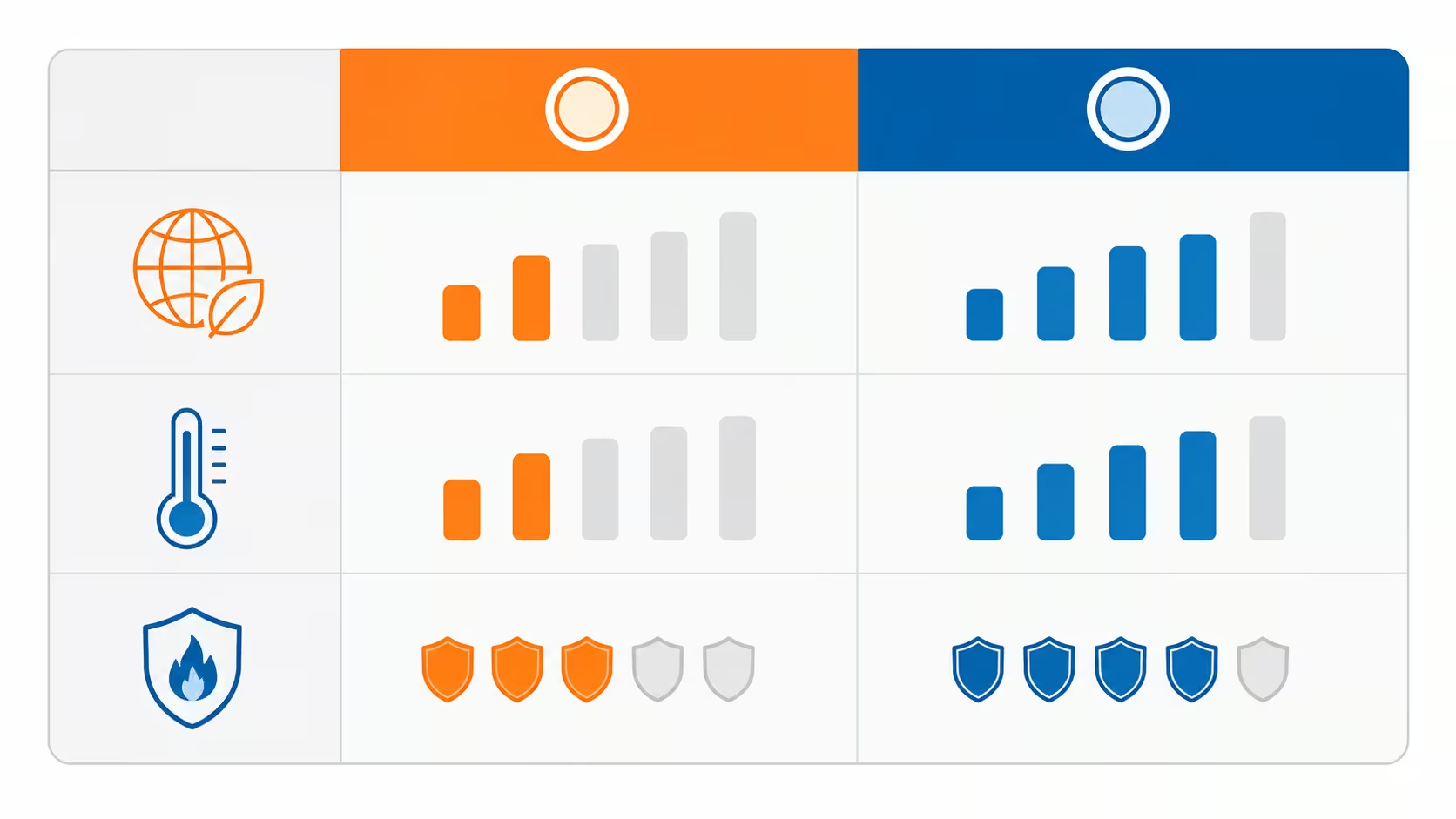
| Property | R-32 | R-1234yf |
|---|---|---|
| Chemical Type | HFC (single component) | HFO (single component) |
| Formula | CH₂F₂ | C₃H₂F₄ |
| GWP | 675 | 4 |
| ODP | 0 | 0 |
| ASHRAE Safety Class | A2L | A2L |
| Boiling Point | -52°C | -29.5°C |
| Critical Temperature | 78.1°C | 94.7°C |
| Atmospheric Lifetime | Years | ~11 days |
| Temperature Glide | 0 (single component) | 0 (single component) |
| Primary Use | Mini-splits, VRF, residential AC | Automotive/mobile AC |
| Retrofit From | R-410A (new equipment) | R-134a (near drop-in) |
Why R-32 Wins the Mini-Split Application
Ductless mini-splits need a refrigerant that balances efficiency, manageable pressure, and a GWP under the residential AC compliance cap. R-32 checks every one of those boxes in a way R-1234yf, on its own, does not for this equipment class.
Efficiency and Charge Advantage
R-32’s thermodynamic properties give it a real capacity edge. Test data on comparable coil designs shows an R-32 system can need roughly 40% less refrigerant charge than an equivalent R-410A coil to hit the same output, thanks to its higher volumetric cooling capacity. That translates into smaller charge sizes, lower material cost, and a smaller potential leak volume if something goes wrong.
Zero Glide Simplifies Diagnostics
Because R-32 is a single compound rather than a blend, it boils and condenses at one consistent temperature for a given pressure. Technicians reading pressure-temperature charts don’t need to account for glide the way they would with a zeotropic blend like R-454B or R-454C. That makes field diagnostics faster and reduces the chance of misreading superheat. For a broader look at reading these charts correctly, see our PT chart, superheat, and subcooling guide.
GWP Fits the Residential AC Cap
At 675 GWP, R-32 sits just under the EPA’s 700 GWP ceiling for new residential air conditioning equipment under the AIM Act. That narrow margin is intentional. Manufacturers like Daikin pushed R-32 globally starting around 2012 specifically because it clears the compliance bar without needing a complex multi-component blend.
Why R-1234yf Owns the Automotive Lane Instead
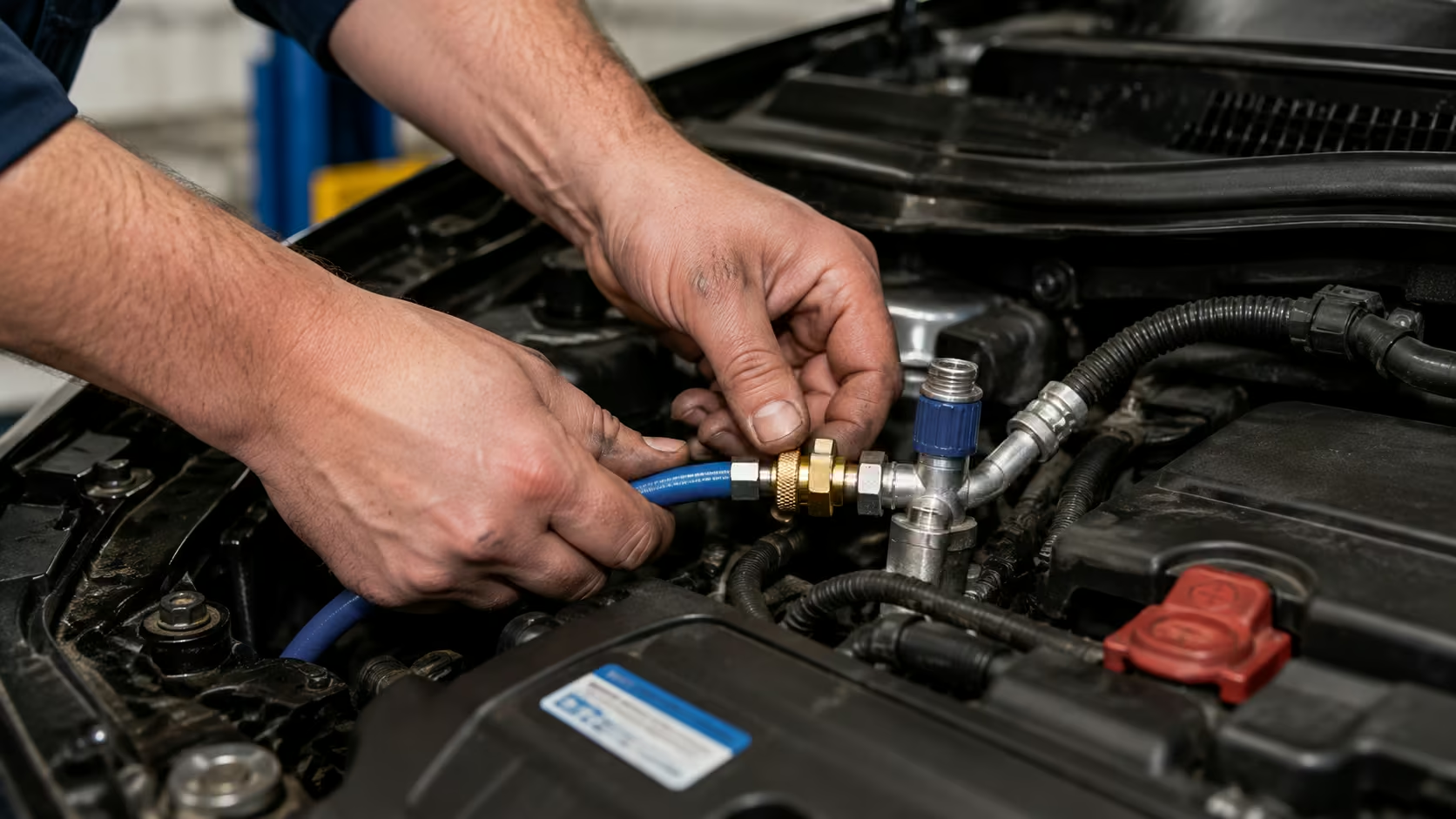
Automotive AC has entirely different priorities than residential mini-splits: tight regulatory GWP limits, compact under-hood space, and a refrigerant that closely matches the outgoing R-134a’s operating pressures.
Ultra-Low GWP Meets a Strict EU Cap
The EU Mobile Air Conditioning Directive set a strict cap of 150 GWP for automotive refrigerants, ruling out R-134a’s GWP of 1,430 entirely. R-1234yf’s GWP of 4 clears that cap by a wide margin, which is why it became mandatory in new EU vehicle models starting in 2017 and was adopted broadly across the US and Asian markets afterward.
Near Drop-In Compatibility With R-134a
R-1234yf is thermodynamically similar enough to R-134a that most automotive retrofits require only compatible lubricants and modest component changes rather than a full system redesign. That similarity is precisely what made industry-wide automotive adoption realistic on a tight regulatory timeline. It’s a different retrofit story entirely from R-32, which requires all-new mini-split hardware rather than adapting existing R-410A equipment.
Short Atmospheric Lifetime
R-1234yf breaks down in the atmosphere in roughly 11 days, compared to years for R-32 and more than a decade for older HFCs like R-134a. That short lifetime is part of why its GWP is so low despite still being classified A2L for mild flammability, since GWP calculations weigh how long a gas persists and traps heat.
Safety Classification: Same Letter, Different Risk Profile in Practice
Both refrigerants share the A2L label, meaning low toxicity and mild flammability under ASHRAE 34. That shared classification does not mean the practical safety considerations are identical across their two very different applications.
Stationary Equipment Safeguards for R-32
Mini-split and VRF systems using R-32 include leak detection sensors and charge-limit design tied to room volume, following IEC 60335-2-40 and UL 60335-2-40 certification requirements. Technicians need A2L-rated tools and training to service this equipment safely.
Automotive Safeguards for R-1234yf
Vehicle systems handle A2L risk differently, relying on sealed system design, dedicated leak detection in the cabin and engine bay, and compartment ventilation rather than the room-volume charge limits used in stationary HVAC. R-1234yf’s auto-ignition temperature sits around 405°C, and its flame propagation is slow, which is why automotive engineers consider the real-world ignition risk low when systems are properly sealed and maintained.
Could Either Refrigerant Cross Into the Other’s Territory?
In practice, no. The mismatch is not about flammability or GWP alone, it’s about the mechanical and regulatory design each refrigerant was built around.
Why R-1234yf Isn’t Used in Mini-Splits
R-1234yf’s thermodynamic properties are tuned for automotive-scale systems and R-134a-like pressures, not the higher-capacity demands of stationary residential cooling. It sees some emerging use in heat pumps and vending equipment, but uptake in that space remains limited compared to R-32, R-1234ze, or CO2.
Why R-32 Isn’t Used in Cars
R-32’s higher GWP would not clear the EU’s strict 150 GWP automotive cap, and its different pressure and capacity profile isn’t matched to compact mobile AC hardware. Automotive engineering standardized on R-1234yf specifically because it threaded that narrow regulatory and mechanical needle. Readers wanting the full residential AC picture can review our R-32 refrigerant HVAC guide.
Frequently Asked Questions
Is R-32 or R-1234yf better for a mini-split system?
R-32 is the standard choice for mini-splits and VRF systems. R-1234yf is designed for automotive air conditioning and is not used in residential ductless equipment.
Why does R-1234yf have such a low GWP compared to R-32?
R-1234yf breaks down in the atmosphere in about 11 days, versus years for R-32, and that short atmospheric lifetime is the main reason its GWP calculates to just 4 versus R-32’s 675.
Can I retrofit my R-410A mini-split to use R-1234yf instead of R-32?
No. R-1234yf is not designed or rated for residential mini-split equipment. R-32 systems require purpose-built hardware regardless of which A2L refrigerant is being considered.
Is R-32 flammable?
R-32 is classified A2L, meaning mildly flammable, under ASHRAE 34. Actual ignition is difficult due to its low burning velocity, and millions of units have operated safely worldwide.
Does R-1234yf work as a drop-in replacement for R-134a in cars?
It comes close, requiring compatible lubricants and modest component changes rather than a full redesign, which is why automotive adoption scaled quickly after EU regulation mandated the switch.
Which refrigerant has zero temperature glide, R-32 or R-1234yf?
Both do. Each is a single-component refrigerant rather than a blend, so neither exhibits the glide seen in zeotropic blends like R-454B or R-454C.
Why did Daikin choose R-32 instead of R-454B for mini-splits?
R-32 offers a real efficiency and charge-size advantage as a single-component refrigerant, and its 675 GWP still clears the 700 GWP residential AC cap without needing a blended formulation.
Is R-1234yf used in any stationary HVAC equipment?
Some emerging use exists in heat pumps and vending machines, but adoption in that space remains limited compared to R-32, R-1234ze, and CO2-based systems.
Conclusion
R-32 and R-1234yf both wear the low-GWP, A2L label, but they were engineered for entirely separate industries. R-32 delivers the efficiency and charge-size advantage that makes it the leading mini-split and VRF refrigerant worldwide, while R-1234yf’s ultra-short atmospheric lifetime and R-134a-like pressures make it the automotive AC standard instead.
Anyone comparing the two for a home cooling decision can stop weighing R-1234yf as an option entirely and focus on R-32 versus its residential AC alternative. For more refrigerant guides and resources, visit SmartRefrigerants.com.