
A technician searching for R-454B vs R-454C is usually staring at two cylinders that look almost identical and wondering if one can substitute for the other. Both carry the R-454 name, both are A2L, and both come from the same two building-block chemicals. That similarity is exactly what causes expensive mistakes in the field.
The truth is that R-454B and R-454C serve completely different equipment classes, run at very different pressures, and are not a drop-in swap for each other in either direction. This guide breaks down the real differences, shows the pressure data side by side, and explains exactly when each refrigerant belongs in a system.
The Shared Chemistry, The Different Purpose

Both refrigerants blend R-32 and R-1234yf, just in opposite proportions. That shared DNA is why people assume they behave the same way, but the ratio is what decides everything about how each one performs in a real system.
R-454B: Built for Residential and Light Commercial AC
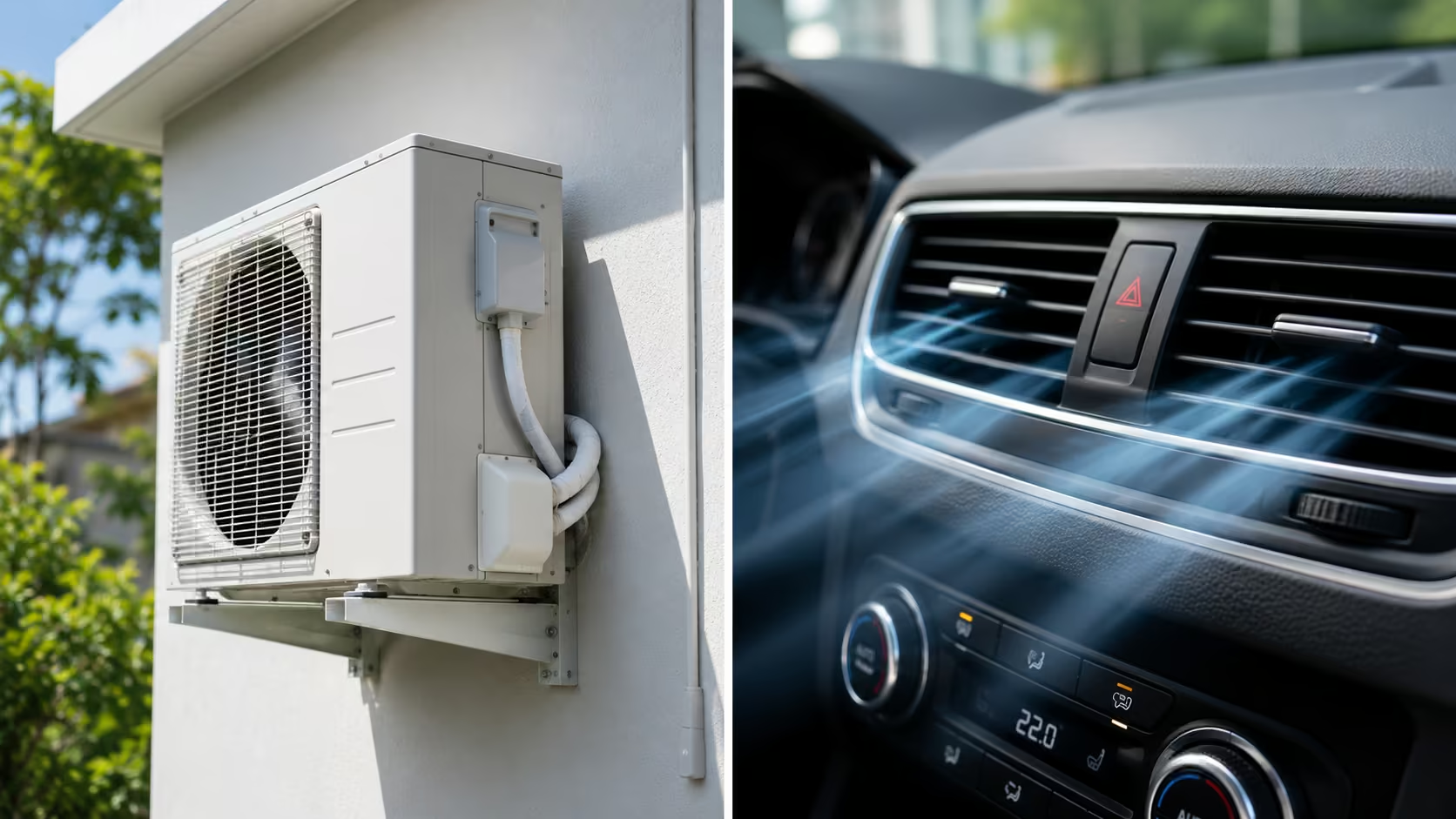
R-454B mixes 68.9% R-32 with 31.1% R-1234yf, landing at a GWP of 466. It is the dominant replacement for R-410A in residential and light commercial air conditioning, where the relevant EPA cap is 700 GWP rather than the stricter 150 GWP limit used for commercial refrigeration. Its pressure curve tracks close enough to R-410A that most equipment platforms transitioned without a full mechanical redesign.
R-454C: Built for Low-Temperature Commercial Refrigeration
R-454C flips the ratio, using 21.5% R-32 and 78.5% R-1234yf, which pushes GWP down to 148. That number matters because it clears the tighter 150 GWP cap that applies to most commercial refrigeration equipment under the 2026–2027 phase-in, and it also satisfies the EU F-Gas 150 threshold. R-454C targets walk-in coolers, walk-in freezers, and remote condensing units, not residential comfort cooling.
Property Comparison at a Glance
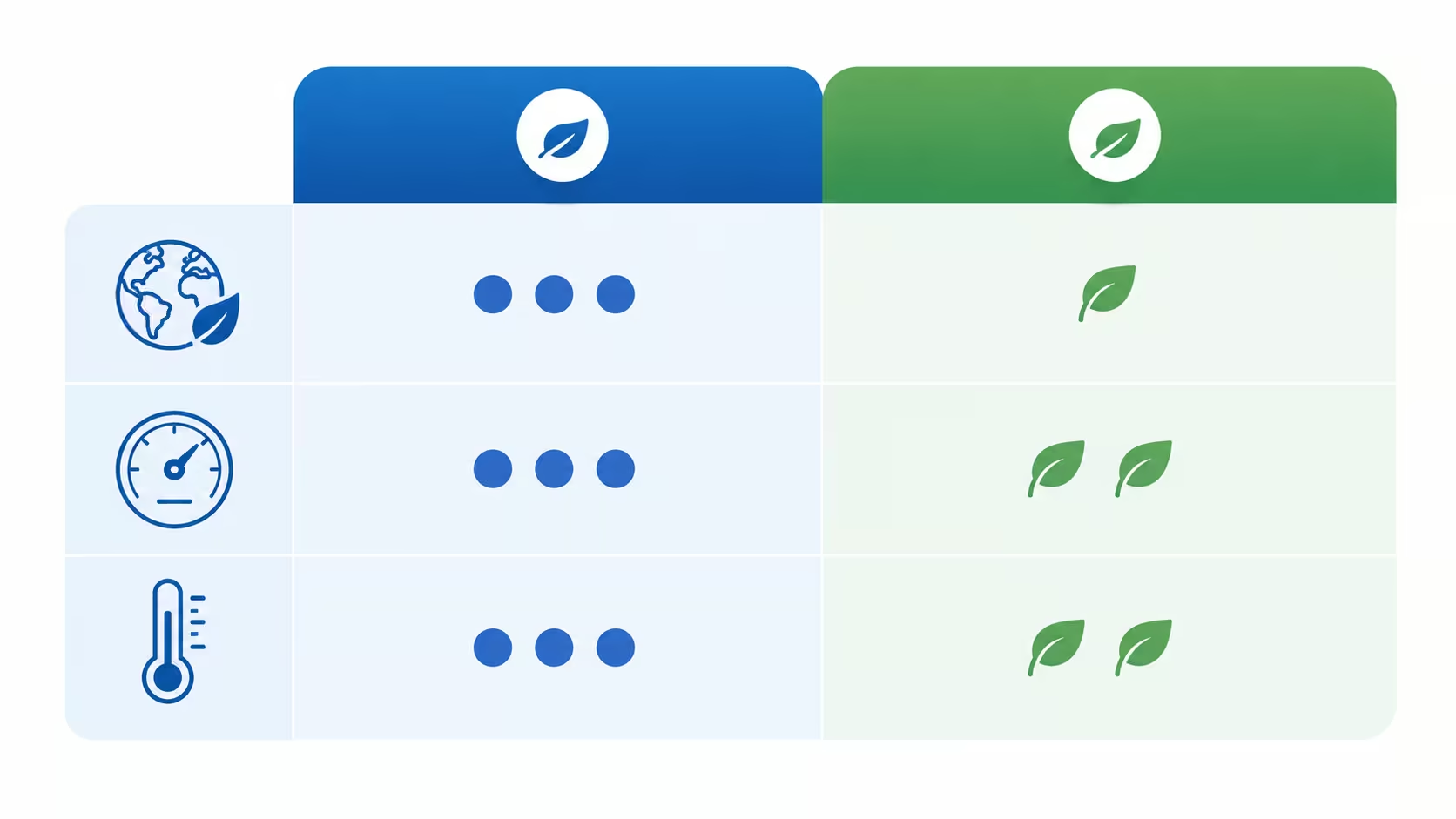
| Property | R-454B | R-454C |
|---|---|---|
| Composition | 68.9% R-32 / 31.1% R-1234yf | 21.5% R-32 / 78.5% R-1234yf |
| GWP (AR5) | 466 | 148 |
| ASHRAE Safety Class | A2L | A2L |
| Lubricant | POE | POE |
| Temperature Glide | ~2.3°F | ~13.9°F |
| Boiling Point | -50.5°C | -45.6°C |
| Typical Application | Residential/light commercial AC | Low-temp commercial refrigeration |
| Replaces | R-410A | R-404A, R-448A |
Pressure Data: Why You Cannot Swap One for the Other
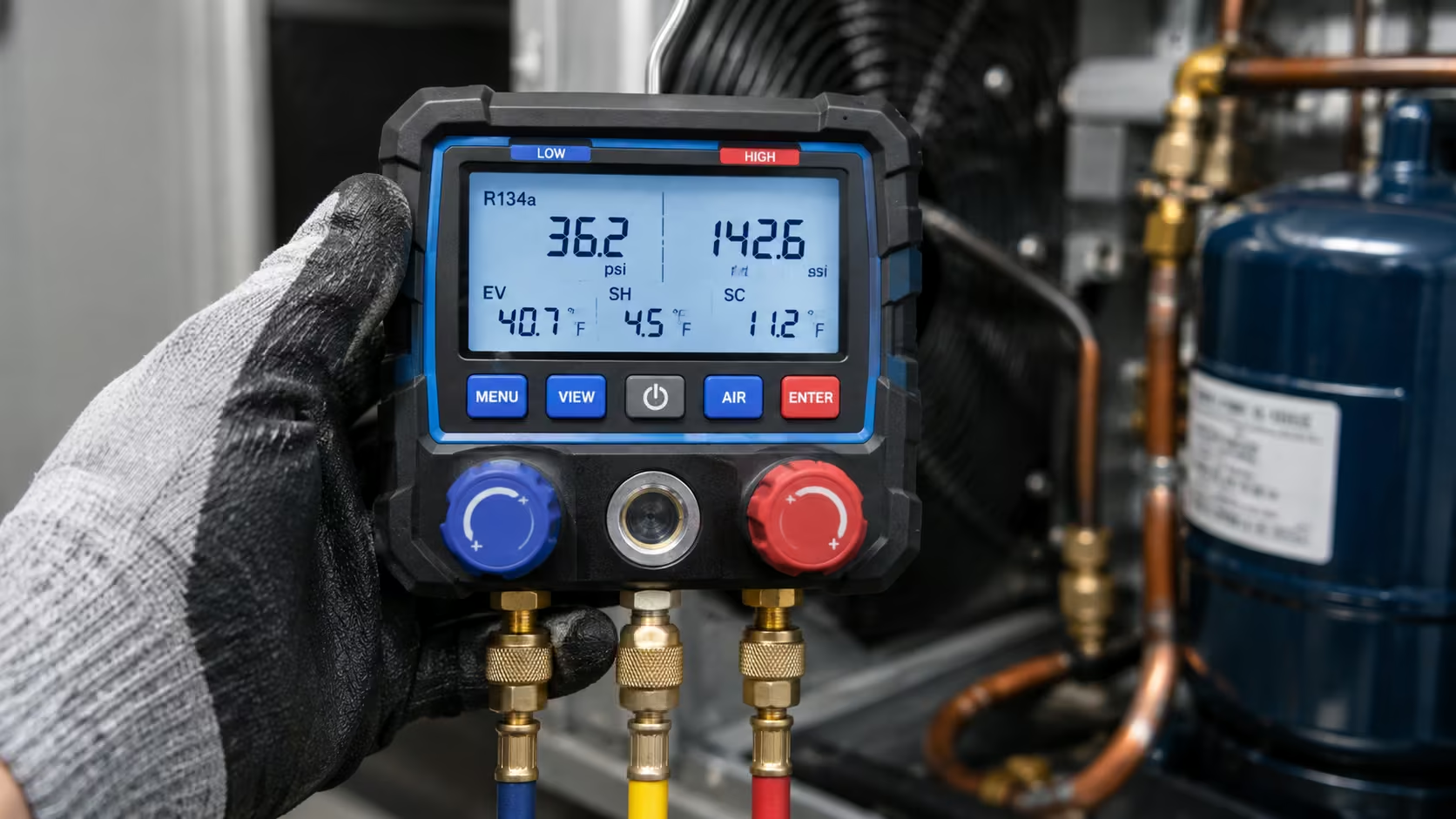
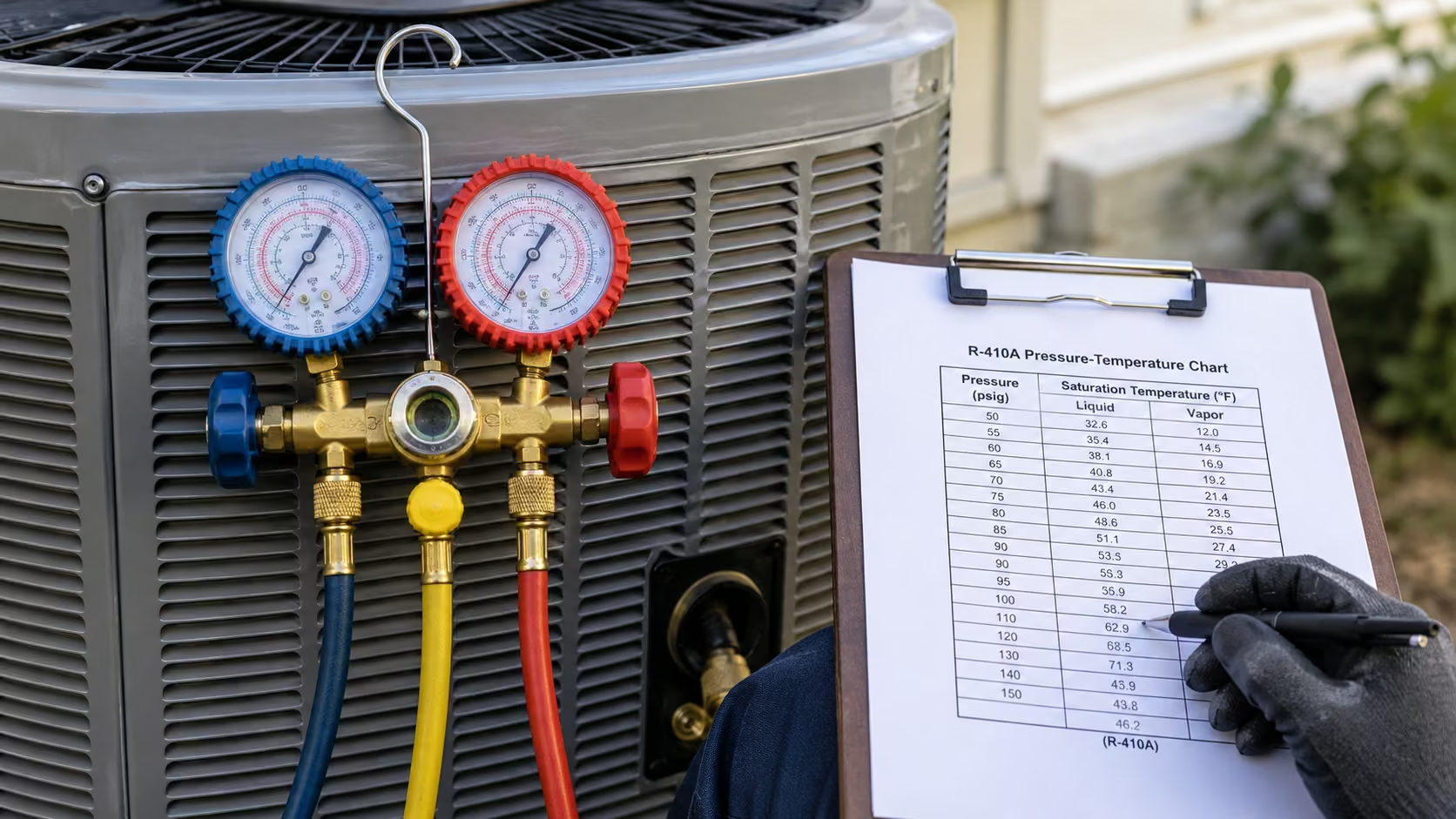
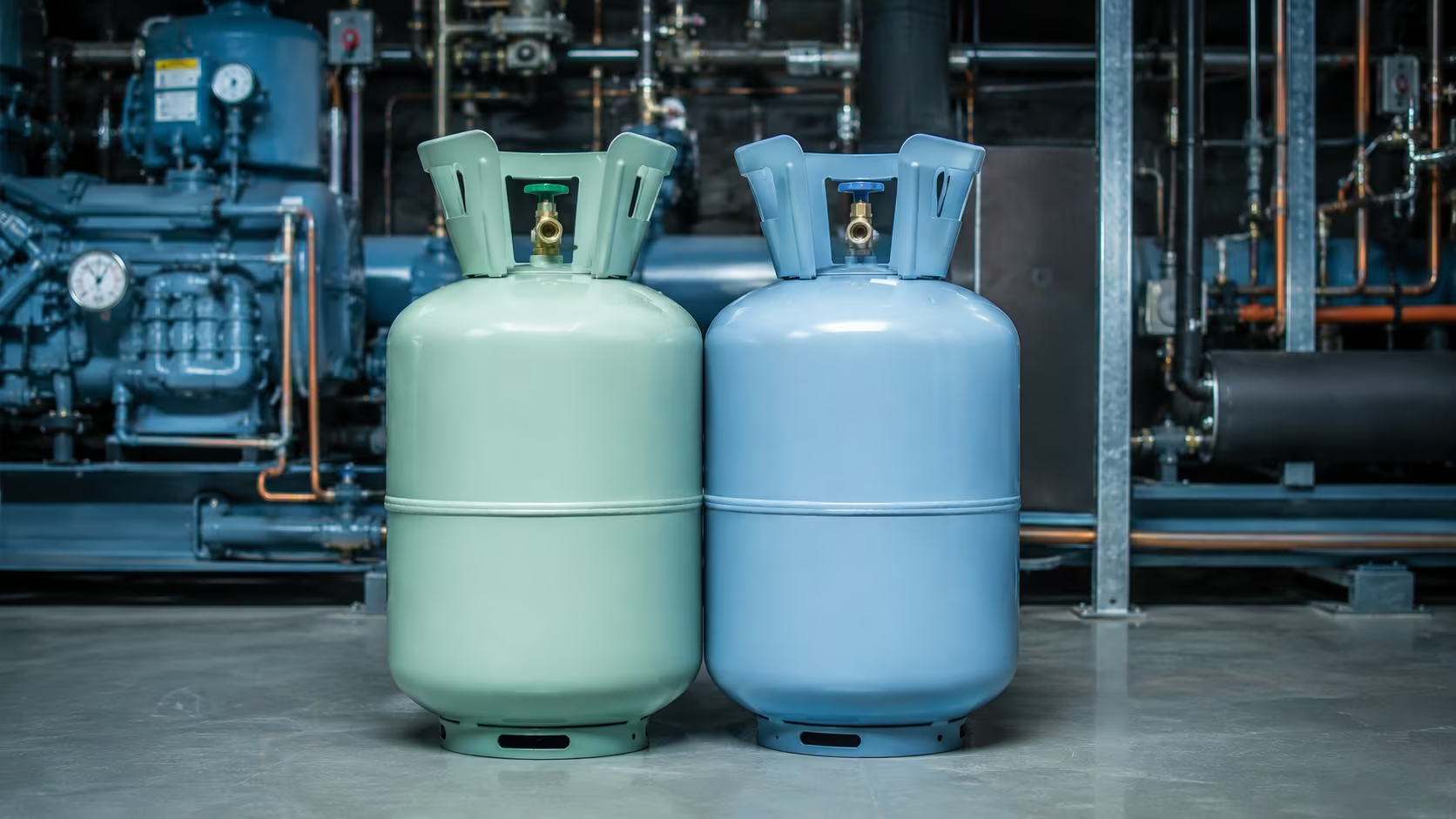
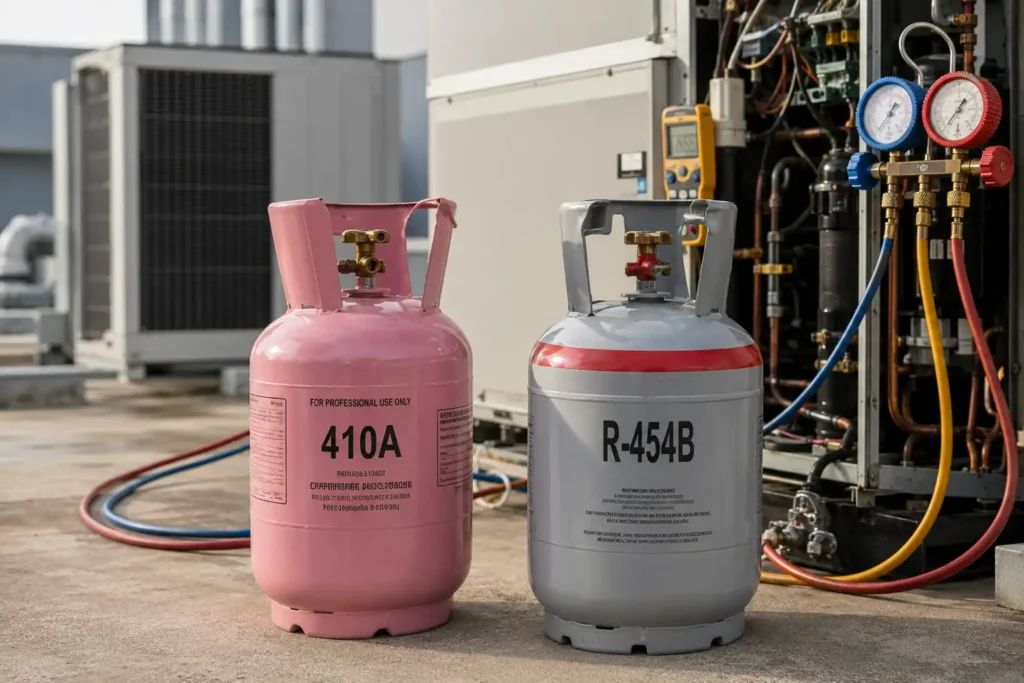
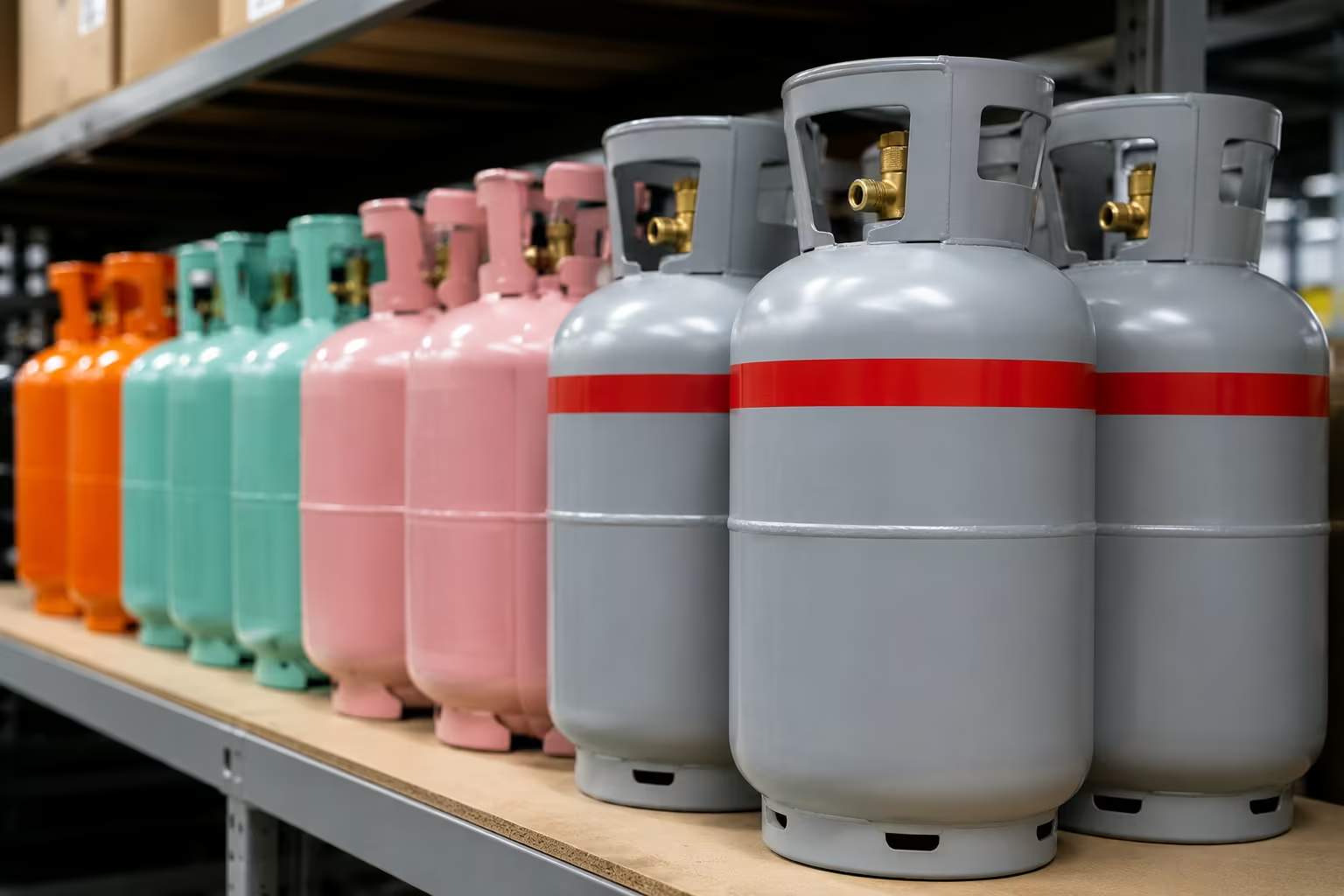
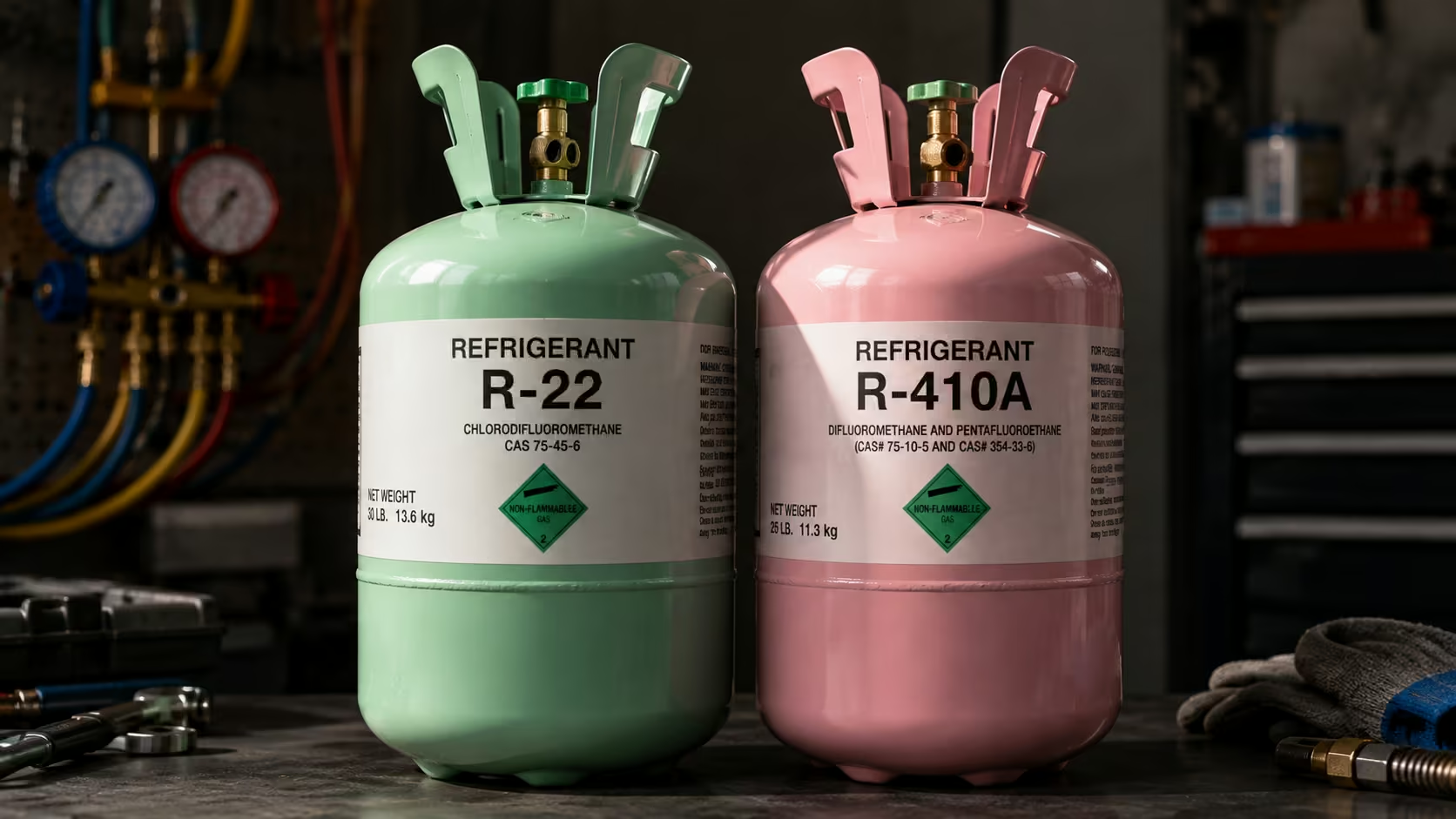
Cylinder color and the shared R-454 prefix make these two look interchangeable on a shelf. The saturation pressure numbers tell a very different story, and this is the data every technician should check before assuming compatibility.
Saturation Pressure by Temperature
| Temperature | R-454B | R-454C | Pressure Delta |
|---|---|---|---|
| -20°F | 24 PSIG | 16 PSIG | -35.5% |
| 0°F | 45 PSIG | 32 PSIG | -29.8% |
| 40°F | 112 PSIG | 82 PSIG | -26.4% |
| 70°F | 191 PSIG | 141 PSIG | -25.9% |
| 95°F | 280 PSIG | 207 PSIG | -26.0% |
| 120°F | 396 PSIG | 292 PSIG | -26.3% |
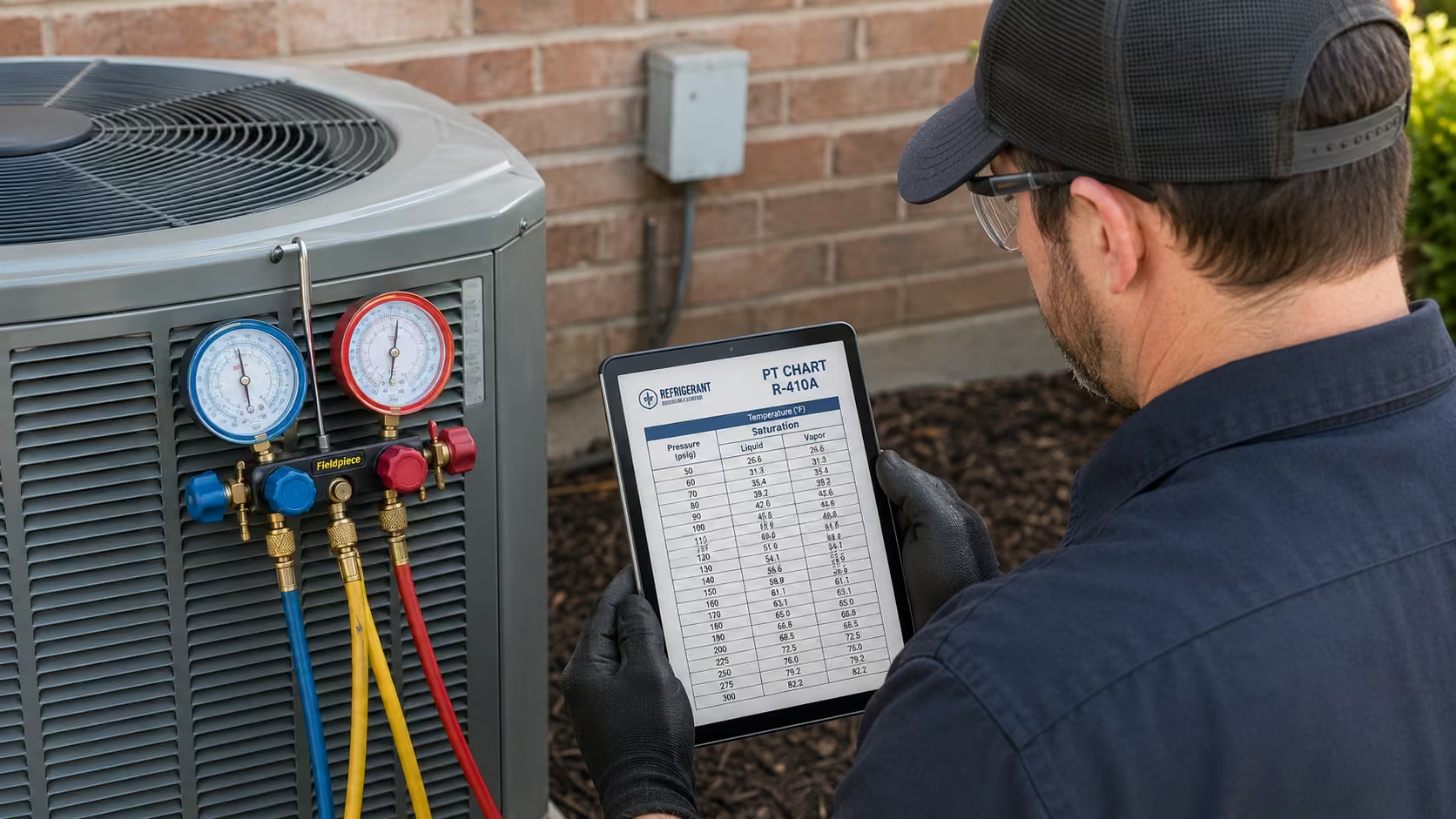
A pressure gap consistently around 26% to 35% is far outside the margin most technicians treat as retrofit-safe. As a rule of thumb, deltas beyond roughly 20% mean compressor, TXV, condenser, and service-valve ratings need a full engineering review rather than a simple refrigerant swap. For a wider explanation of reading these curves, see our guide on how to read a refrigerant PT chart.
Why the Glide Difference Matters On Service Calls
R-454C carries a much larger temperature glide, at roughly 13.9°F compared to R-454B’s 2.3°F. Glide is the temperature spread between a refrigerant’s bubble point and dew point during a phase change, and a large glide changes how superheat has to be calculated. Technicians servicing R-454C equipment need to measure off the dew curve, not the bubble curve, or their superheat numbers will be off by the full glide amount.
Choosing the Right Refrigerant By Application
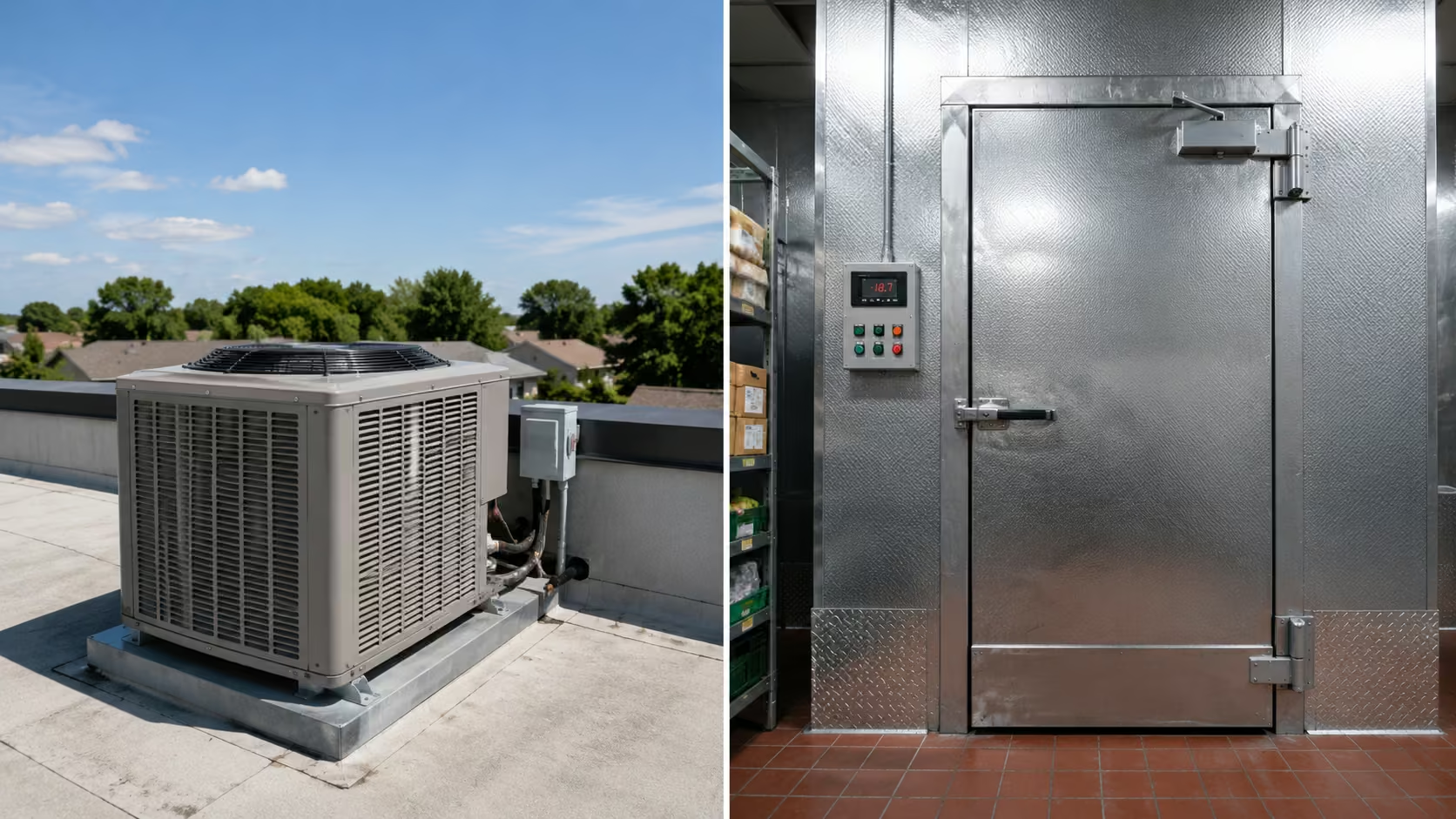
Picking between these two is not a preference call, it is an application match. Getting it backwards does not just hurt efficiency, it can void the equipment warranty entirely.
When R-454B Is the Right Choice
R-454B fits residential and light commercial air conditioning, rooftop units up to roughly 25 tons, and most larger commercial chillers where the GWP cap sits at 700 rather than 150. Its near-R-410A pressure envelope is exactly why major OEMs like Carrier standardized on it during the transition, branding it Puron Advance in some product lines.
When R-454C Is the Right Choice
R-454C fits medium and low-temperature commercial refrigeration: supermarket cases, walk-in coolers running to about 32–36°F, and walk-in freezers on the low-temperature side. It is designed as a next-generation replacement for R-404A and R-448A, both of which carry far higher GWP than the new 150 cap allows.
Service Equipment: What Changes and What Doesn’t
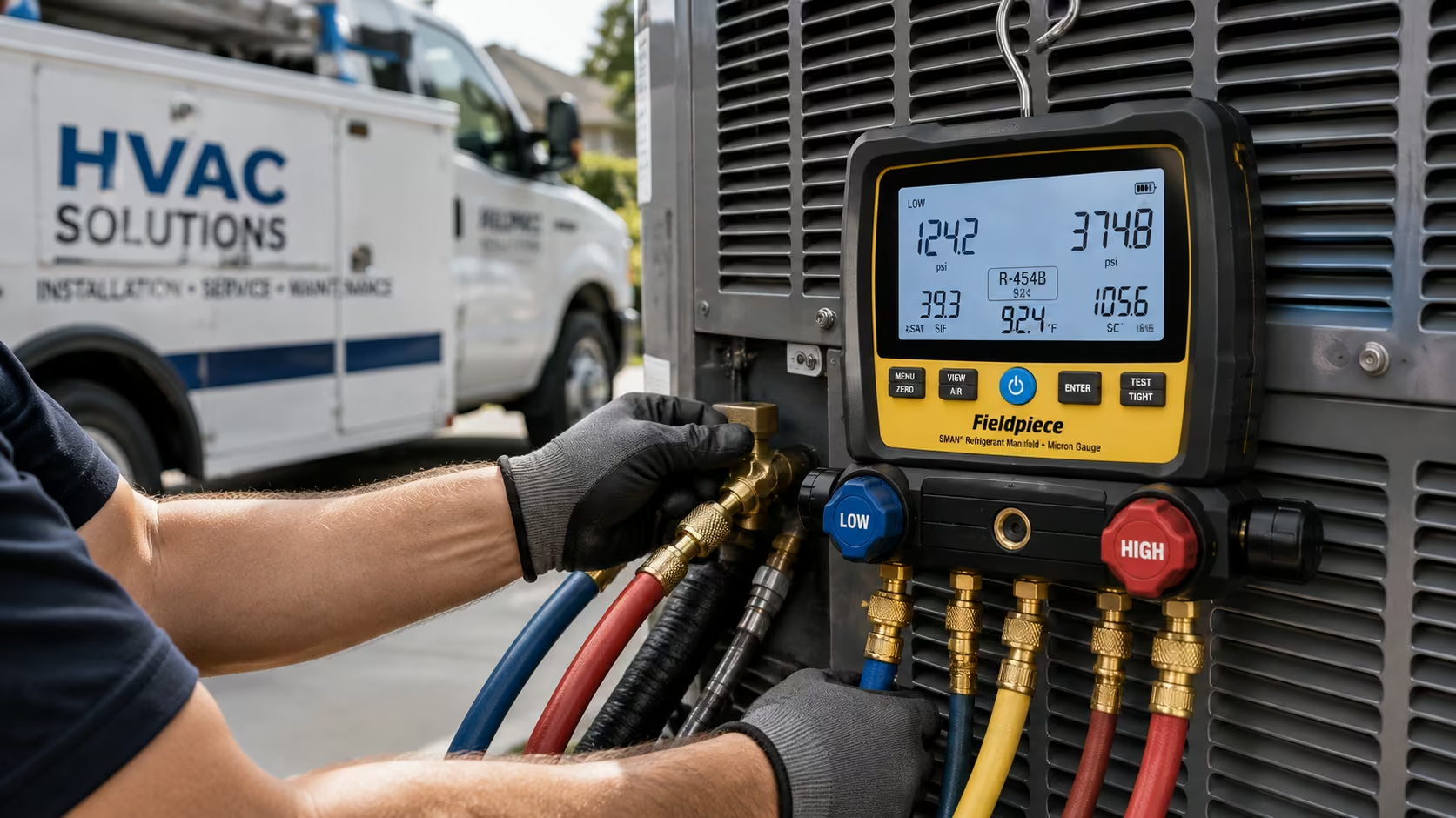
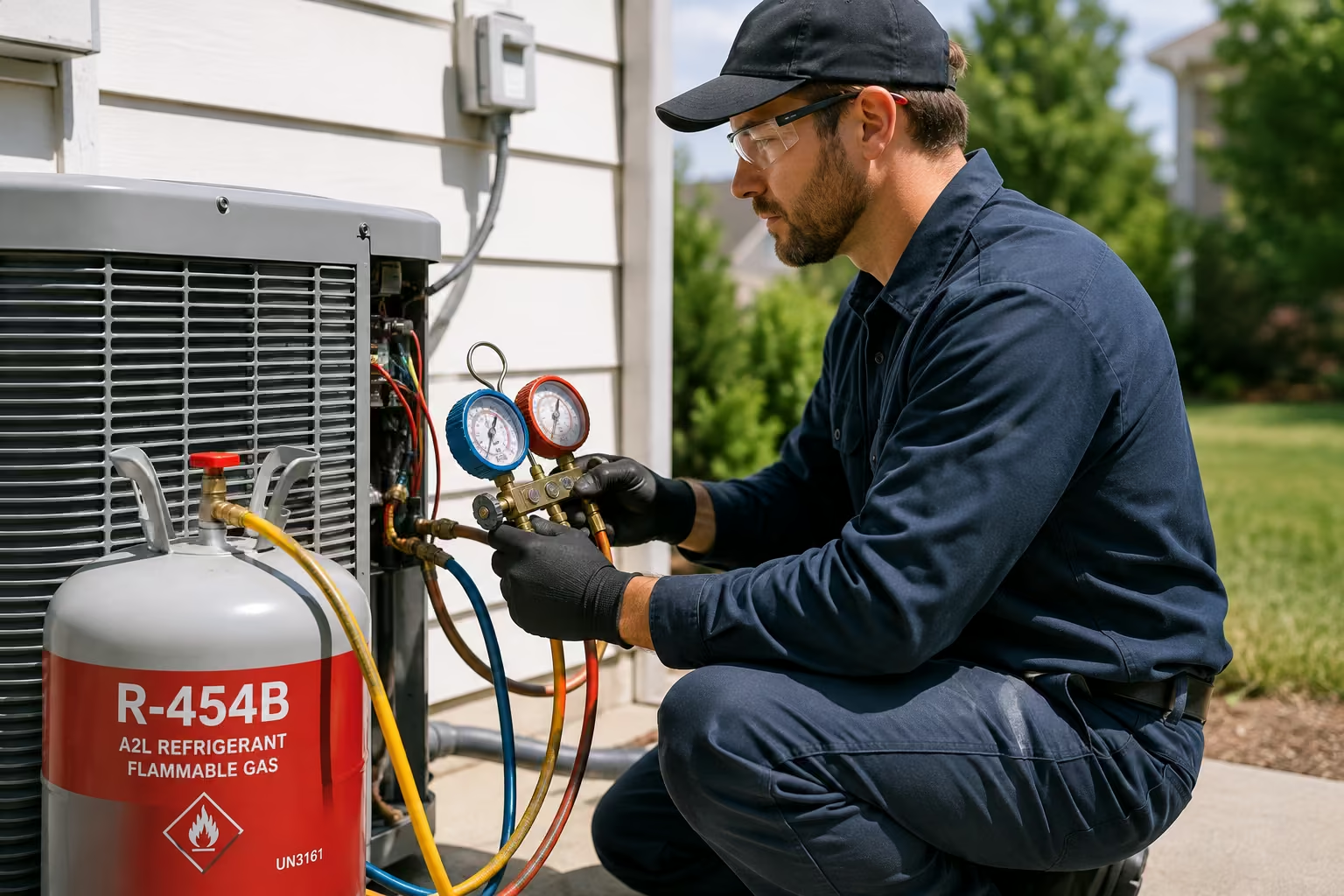
Both refrigerants share the same lubricant family, POE, so oil compatibility is not a concern when servicing either one on its own equipment. What does change is pressure-rated hardware and leak detection. Both require A2L-rated tools, hydrocarbon-capable leak detectors, and equipment certified to UL 60335-2-40 or IEC 60335-2-40.
Regulatory Context Driving the Split
The reason two refrigerants exist from the same two chemicals comes down entirely to regulation. Different equipment categories face different GWP ceilings, and manufacturers formulate blends to land just under each specific cap rather than using one universal refrigerant everywhere.
EPA AIM Act Sector Caps
Under the AIM Act, the EPA sets different GWP thresholds by equipment sector rather than one blanket number. Residential and light commercial AC falls under the 700 GWP cap, which R-454B clears comfortably at 466. Most commercial refrigeration equipment falls under the tighter 150 GWP cap, which is why R-454C was formulated specifically to land at 148.
EU F-Gas Alignment
The EU F-Gas Regulation applies a 150 GWP ceiling to most stationary refrigeration equipment, which is tighter than the AIM Act’s residential AC cap. That makes R-454C, not R-454B, the compliant choice for European commercial refrigeration equipment, even though R-454B is the norm for American residential systems.
What Cylinder Color Does and Doesn’t Tell You
AHRI publishes standard cylinder colors for refrigerants, and R-454B and R-454C ship in similar light gray-green cylinders under AHRI Guideline N, with only the safety shoulder band distinguishing them. That similarity is a real hazard on a crowded truck.
Never Charge By Color Alone
The cylinder label and the equipment data plate are the only authoritative sources for which refrigerant a system needs. Cross-charging the wrong 454-family refrigerant will not usually cause immediate failure, but it will shift operating pressure, capacity, and discharge temperature off the design point, sometimes significantly, and it voids the warranty. For a full breakdown of what colors do and don’t guarantee, see our refrigerant cylinder color code guide.
Frequently Asked Questions
Can I use R-454C in a system designed for R-454B?
No. The pressure envelopes differ by roughly 26% to 35% depending on temperature, and R-454C’s much larger glide requires different metering and superheat calculation. The equipment is not rated for it.
Which has the lower GWP, R-454B or R-454C?
R-454C, at 148 GWP, compared to R-454B’s 466 GWP. That is why R-454C fits the tighter 150 GWP cap used for commercial refrigeration equipment.
Do R-454B and R-454C use the same lubricant?
Yes, both use POE oil, so there is no lubricant compatibility issue when each is serviced correctly in its own designed equipment.
Why does R-454C have such a large temperature glide?
Its composition is heavily weighted toward R-1234yf, at 78.5%, and that ratio produces a wider gap between bubble point and dew point during phase change, around 13.9°F.
Is R-454C a direct replacement for R-404A?
It is designed as a next-generation replacement in new or retrofitted equipment, but it is not a same-day drop-in swap. Equipment needs to be designed or modified specifically for R-454C’s pressure and glide characteristics.
What tools do I need to service both refrigerants safely?
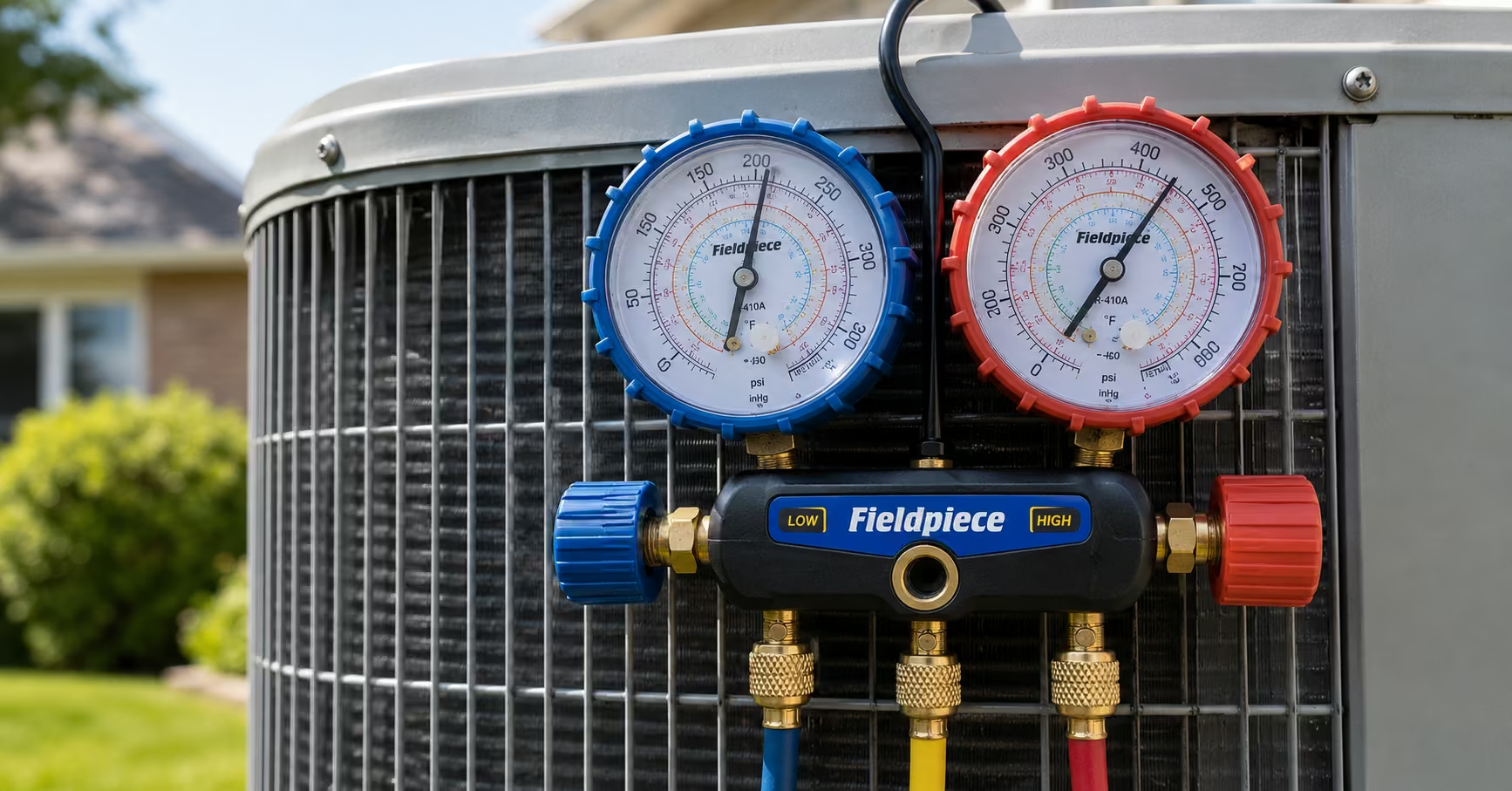
A2L-rated manifolds, hoses, recovery machines, and hydrocarbon-capable leak detectors are required for both. Standard halogen leak detectors are not sensitive enough for A2L refrigerants.
Can cylinder color help me tell R-454B and R-454C apart?
Not reliably. Both ship in similar AHRI-standard cylinders, with only the safety shoulder band differing. Always confirm against the cylinder label and equipment data plate.
Does the EU require a different refrigerant than the US for the same equipment type?
Sometimes, yes. The EU F-Gas Regulation’s 150 GWP cap on stationary refrigeration pushes European commercial systems toward R-454C, while the AIM Act’s 700 GWP cap allows R-454B in American residential AC.
Conclusion
R-454B and R-454C share two parent chemicals but were built for opposite jobs. R-454B keeps homes cool under the 700 GWP residential cap, while R-454C serves commercial refrigeration under the tighter 150 GWP ceiling, and their pressure curves make that split non-negotiable in the field.
The safest habit for any technician is to treat the “454” name as a family label, not a compatibility guarantee, and always confirm against the equipment data plate before charging. For more refrigerant guides and resources, visit SmartRefrigerants.com.