
Buy R-134a Refrigerant Online
Genuine R-134a in cylinder and case quantities, the standard automotive A/C refrigerant for vehicles built before 2021, and still common in commercial refrigeration and chillers. EPA compliant, ships nationwide.
A1
1,430
0
-15°F
30 lb
PT Chart Preview (partial)
A quick-reference preview use the full calculator for any pressure or temperature, not just the values below.
| Temperature (°F) | Pressure (psig) |
|---|---|
| 0 | 8.9 |
| 20 | 21.3 |
| 40 | 35.7 |
| 60 | 57.4 |
| 80 | 84.8 |
| 100 | 124.1 |
| 120 | 172.7 |
Need a value not listed here? Open the full R-134A PT calculator →
Where R-134A Is Used
Pre-2021 Vehicle A/C Systems
The standard MVAC refrigerant before the industry shift to R-1234yf.
Commercial Refrigeration & Chillers
Still widely used across supermarket cases and chiller platforms.
Process Cooling
Common in industrial and light-commercial process refrigeration equipment.
Shop R-134A Cylinders
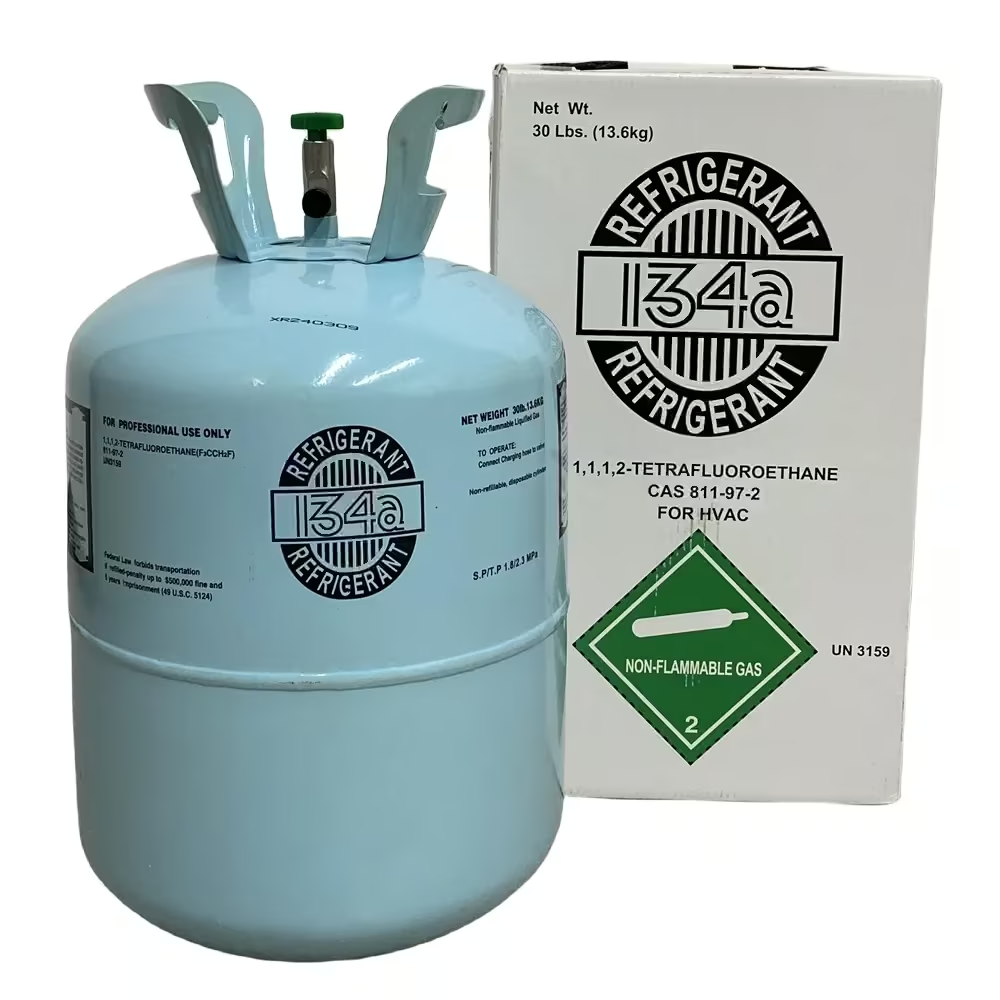
R-134A 30lb Refrigerants 30lb Automotive 1/2 ACME Made in USA
In stock
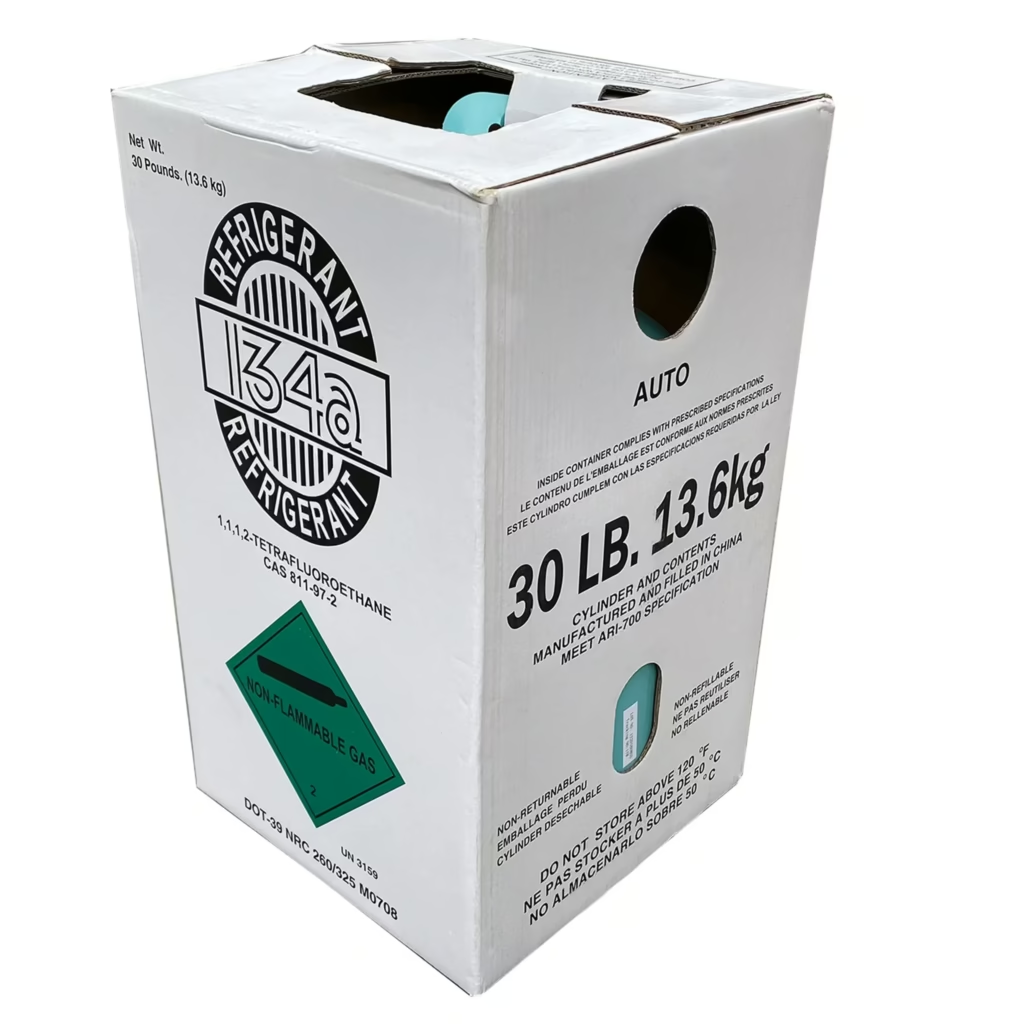
R134A 20x30lb Cylinders Automotive Refrigerant FREE FREIGHT!
In stock
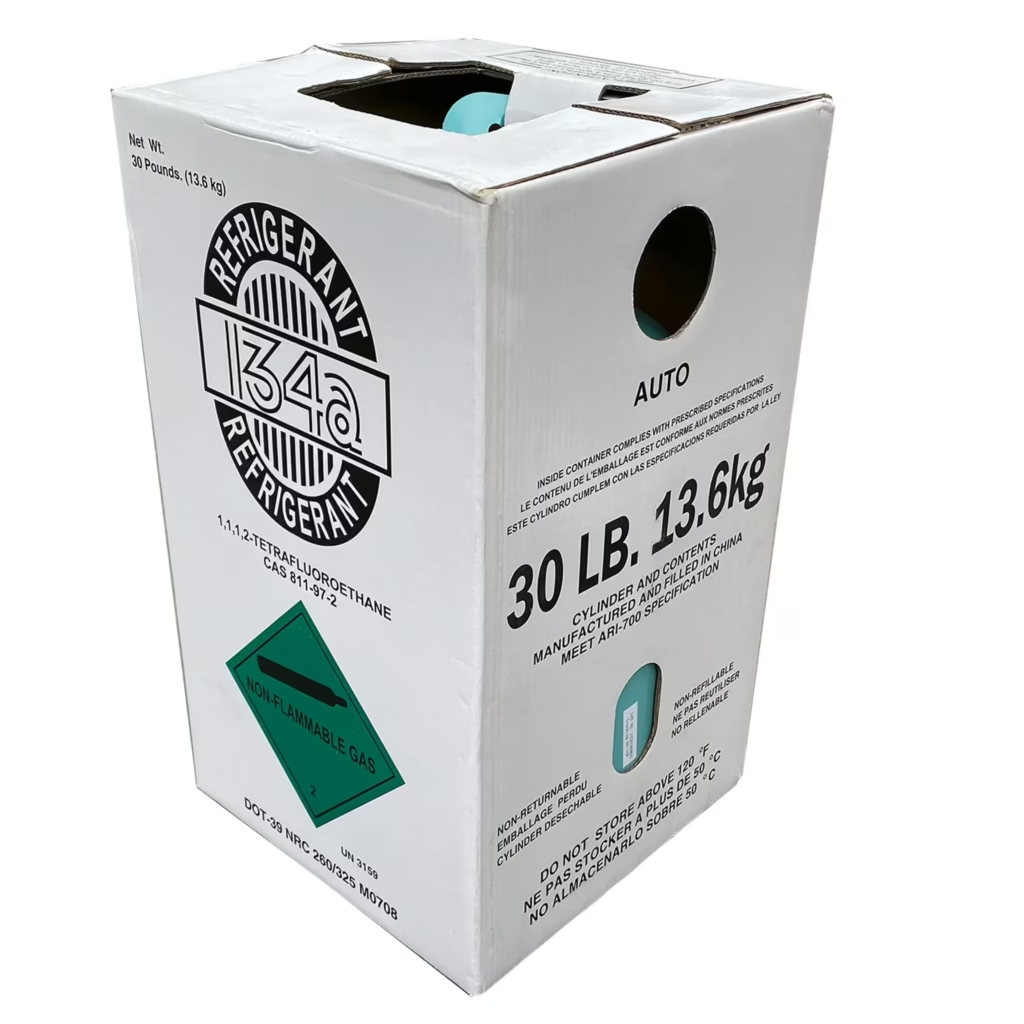
R134A 40x30lb Cylinders Automotive Refrigerant FREE FREIGHT!
In stock
R-134A vs. R-1234yf: Which One Do You Need?
Both run in overlapping equipment categories here's how they actually differ.
| Feature | R-134a | R-1234yf (its automotive replacement) |
|---|---|---|
| GWP (100-yr) | 1,430 | 4 |
| ASHRAE Class | A1 (non-flammable) | A2L (mildly flammable) |
| Typical Use | Pre-2021 vehicles, commercial refrigeration | 2021+ vehicles (mandated) |
| Certification Needed | EPA Section 609 (automotive) or 608 (stationary) | EPA Section 609 |
Not sure which one your system uses? Check the dataplate on your outdoor unit, or see our HVAC brand compatibility guides →
EPA Section 608/609 Notice
R-134a purchases require valid EPA certification on file before checkout: Section 609 for automotive service, Section 608 for stationary refrigeration and chiller work. Small cans (2 lb or less) sold for retail automotive use carry separate labeling requirements under EPA rules. R-134a is classified ASHRAE A1 (non-flammable, lower toxicity).
Related Guides
R-134a vs. R-1234yf: What Changed in 2021
Understanding the mandated automotive refrigerant shift.
- Read Guide →
Servicing Commercial R-134a Chillers
What stays the same as automotive work, and what doesn't.
- Read Guide →
R-134a Retail Can Regulations
What EPA rules apply to small-can automotive sales.
- Read Guide →
What Every Technician Should Know About R-134a
The automotive standard for two decades, and still a mainstay in commercial refrigeration even as new vehicles move on.
Automotive vs. Stationary R-134a Certification
A technician servicing vehicle A/C systems needs EPA Section 609 certification, while a technician working on stationary commercial refrigeration or chiller equipment needs Section 608, the two credentials aren't interchangeable, and buying R-134a for either application requires the matching certification on file.
Why R-1234yf Didn't Replace R-134a Everywhere
The mandate to shift automotive A/C to R-1234yf applies specifically to new vehicles, not to commercial refrigeration, chillers, or the millions of pre-2021 vehicles still running R-134a, which is why demand for genuine R-134a remains strong well past the automotive mandate's start date.
Small-Can Regulations for Automotive Sales
EPA rules place specific restrictions on small automotive R-134a cans (2 lb or less) sold at retail, including labeling and self-sealing valve requirements aimed at reducing venting during DIY top-offs. Distributors selling these cans need to confirm packaging meets current requirements.
Frequently Asked Questions
No, vehicles built in 2021 and later are required to use R-1234yf instead. Most vehicles built before that still use R-134a.
Section 609 for automotive A/C service, or Section 608 for stationary commercial refrigeration and chiller work.
No, the two refrigerants have different properties and vehicle systems are engineered for one or the other specifically.
No. R-134a is ASHRAE-classified A1, non-flammable and lower toxicity.
The automotive shift to R-1234yf applies specifically to new vehicles, it doesn't affect commercial refrigeration or chiller equipment, which continues to use R-134a widely.
Yes, EPA regulations require specific labeling and self-sealing valves on small automotive cans (2 lb or less) sold at retail.
Need R-134a Today?
In-stock cylinders and cases ship same day, with wholesale pricing available for shops and distributors.