
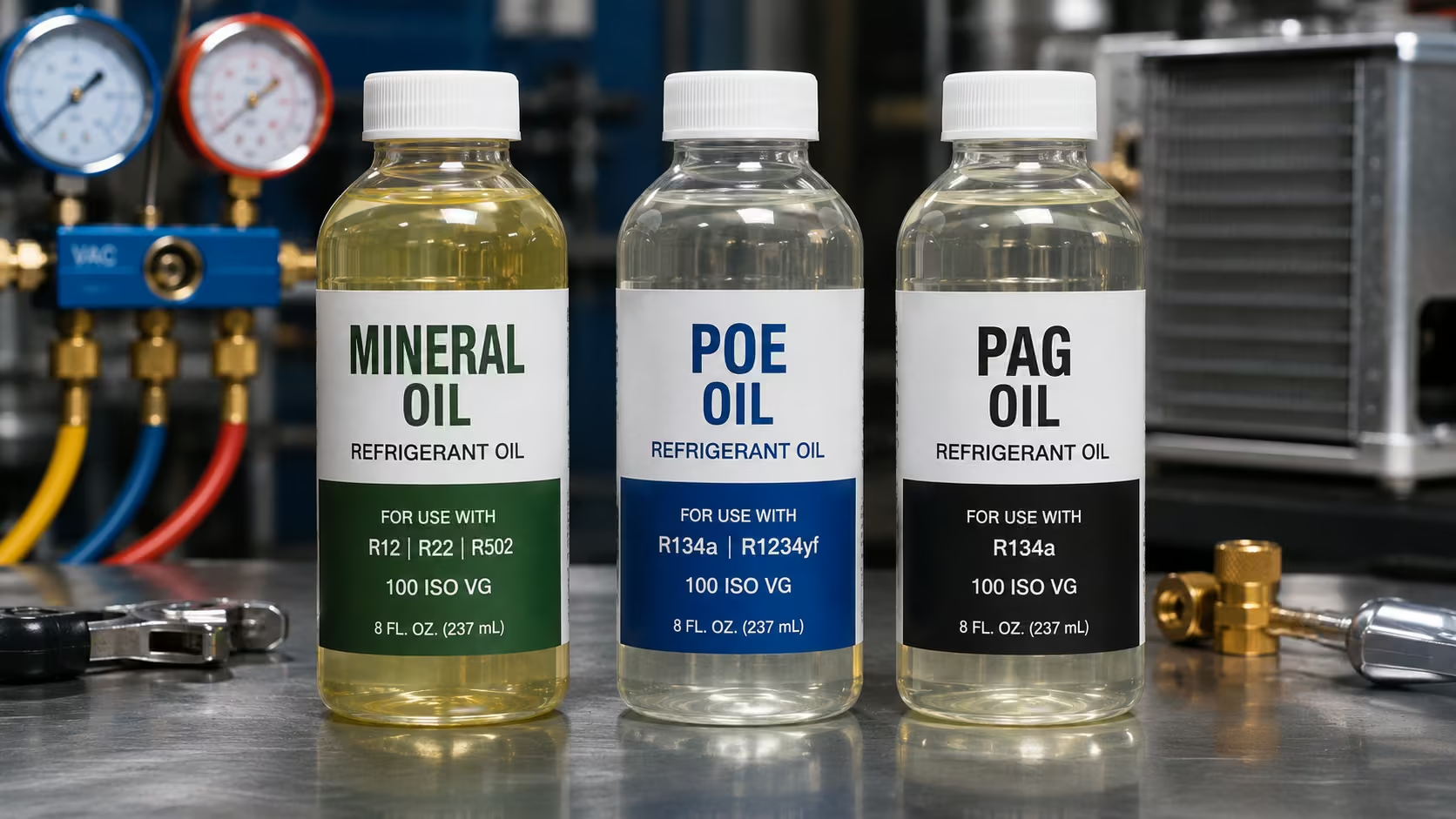
Picking the wrong compressor oil can quietly wreck a system. A tech pours in mineral oil where POE oil belongs, and months later the compressor seizes, the warranty gets voided, and the customer ends up furious. This mix-up happens more often than most shops admit, because refrigerant oils look nearly identical in the bottle.
The good news: once someone breaks down the differences between refrigerant oil types clearly, they’re easy to learn. This guide walks through mineral, POE, PAG, and alkylbenzene oils, explains what each one is built for, and shows exactly which oil pairs with which refrigerant so every job gets it right the first time.
What Refrigerant Oil Actually Does Inside a System
Refrigerant oil isn’t just a lubricant sitting in the compressor. It travels through the entire refrigeration circuit, riding along with the refrigerant itself. As refrigerant moves through the evaporator, compressor, condenser, and metering device, a small amount of oil circulates too. It coats moving parts and returns to the compressor to keep it alive.
That circulation only works if the oil and refrigerant are miscible, meaning they mix well enough that oil doesn’t pool up somewhere it shouldn’t. Using the wrong oil can cause it to separate from the refrigerant. It then collects in the evaporator coil or suction line instead of returning to the compressor. Over time this starves the compressor of lubrication, and starved compressors fail fast.
Why Oil and Refrigerant Compatibility Matters
Every refrigerant has its own molecular structure, and that structure decides which oils it will mix with. Older CFC and HCFC refrigerants worked fine with simple mineral oils, but newer HFC and HFO refrigerants need oils with polar molecules that actively attract and hold onto the refrigerant. An incompatible pairing doesn’t always fail immediately — instead, it shortens compressor life and reduces cooling capacity over time.
How Oil Type Affects Compressor Life
A compressor with proper lubrication can run for well over a decade. One running on the wrong oil, or oil contaminated with moisture, can fail in a year or two instead. The bearings, pistons, and seals inside a compressor all depend on a consistent oil film, and that film only forms correctly when the oil chemistry matches the refrigerant chemistry.
Mineral Oil: The Original Refrigeration Lubricant

Mineral oil comes from refining crude oil, and it was the standard lubricant for refrigeration systems for most of the twentieth century. It works well with R-12 and R-22, the CFC and HCFC refrigerants that dominated the industry before environmental regulations forced a shift toward newer chemistries.
Mineral oil is inexpensive, widely available, and chemically simple compared to synthetic alternatives. Technicians servicing pre-1995 vehicles or older commercial refrigeration units built for R-22 will often still encounter mineral oil in the system, so understanding it remains useful even as those systems age out.
Which Systems Still Use Mineral Oil
Mineral oil shows up almost exclusively in legacy equipment. Older R-12 automotive air conditioning, aging R-22 residential heat pumps, and some older commercial refrigeration racks still run on it. Because R-22 is being phased out under EPA regulations, mineral oil use keeps shrinking every year as those units get retired or retrofitted.
Limitations of Mineral Oil in Modern Systems
Mineral oil does not mix well with HFC refrigerants like R-134a or R-410A. It lacks the polar molecular structure that HFCs need for proper miscibility, so pairing mineral oil with a modern refrigerant leads to poor oil return and eventual compressor damage. This is exactly why the industry moved toward synthetic alternatives as refrigerant chemistry changed.
POE Oil: The Modern Standard for HFC Systems
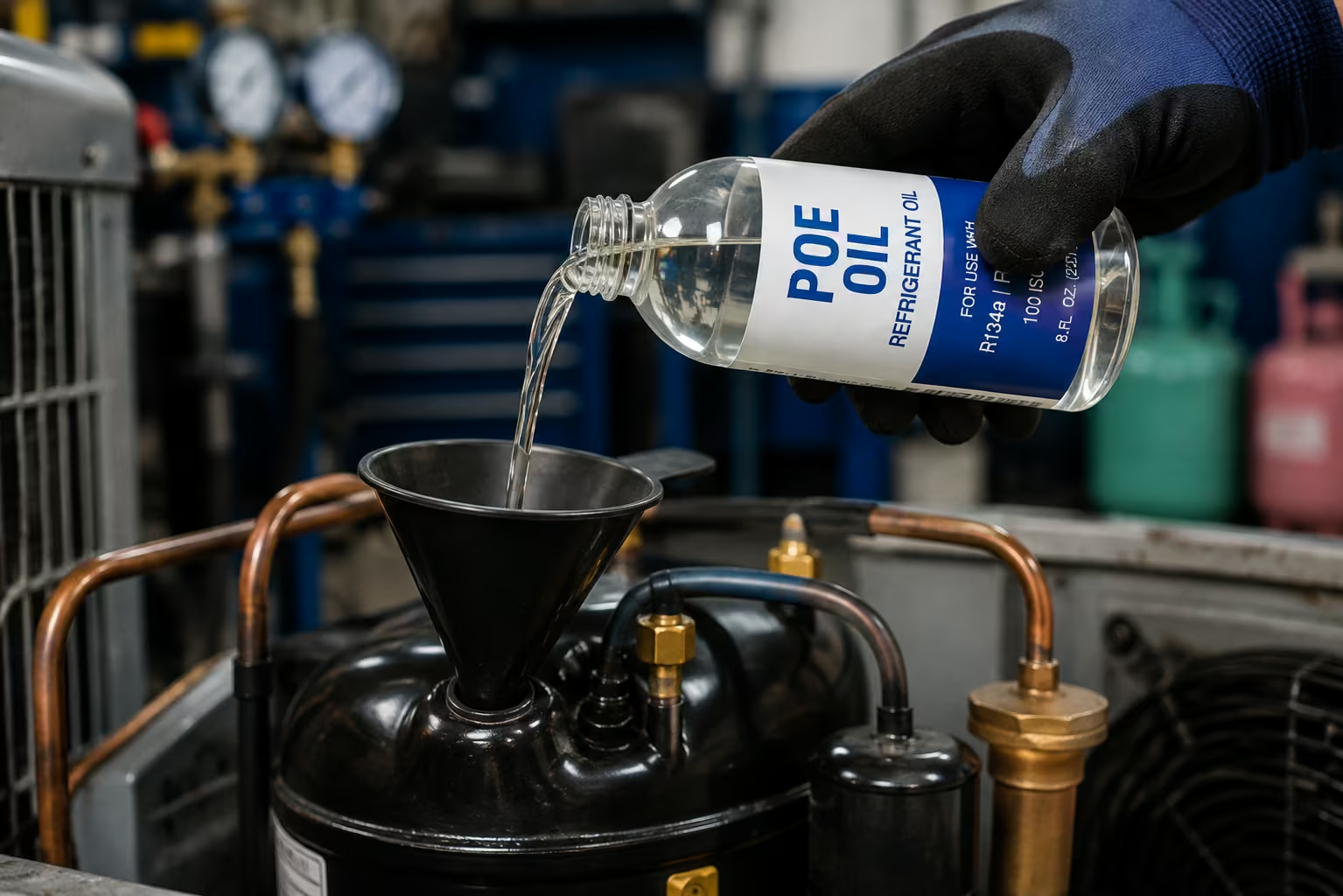
POE oil, short for polyol ester oil, became the default lubricant once HFC refrigerants like R-134a, R-410A, and R-404A took over the market. Being fully synthetic, it carries a polar molecular structure that gives it excellent miscibility with HFC refrigerants across a wide temperature range. It also works as a bridge lubricant during retrofits, since it can mix reasonably well with both older and newer refrigerant families versatility that earned it the nickname “retrofit oil” among technicians converting R-12 systems to R-134a.
Note: technicians use both POE and PAG oils with R-134a depending on the application. Stationary and commercial systems (such as chillers) typically pair with POE oil, while automotive R-134a systems run on PAG oil instead, as detailed in the PAG Oil section below.
POE Oil and Moisture Sensitivity
The one real weakness of POE oil is its attraction to water. Because POE is hygroscopic, it pulls moisture straight out of the air if left exposed. Once water gets into POE oil, it triggers hydrolysis, a chemical reaction that breaks the oil down into acids and alcohol — and those acids then attack metal components inside the compressor. So keeping POE oil sealed and dry isn’t optional; it’s essential.
Best Practices for Handling POE Oil
Technicians should keep POE oil containers closed whenever they aren’t actively dispensing oil. They should also never leave a refrigeration system open to the atmosphere longer than necessary. Installing a properly sized filter-drier helps trap any moisture that sneaks in, protecting the compressor from acid formation over the life of the system.
PAG Oil: Built Specifically for Automotive AC
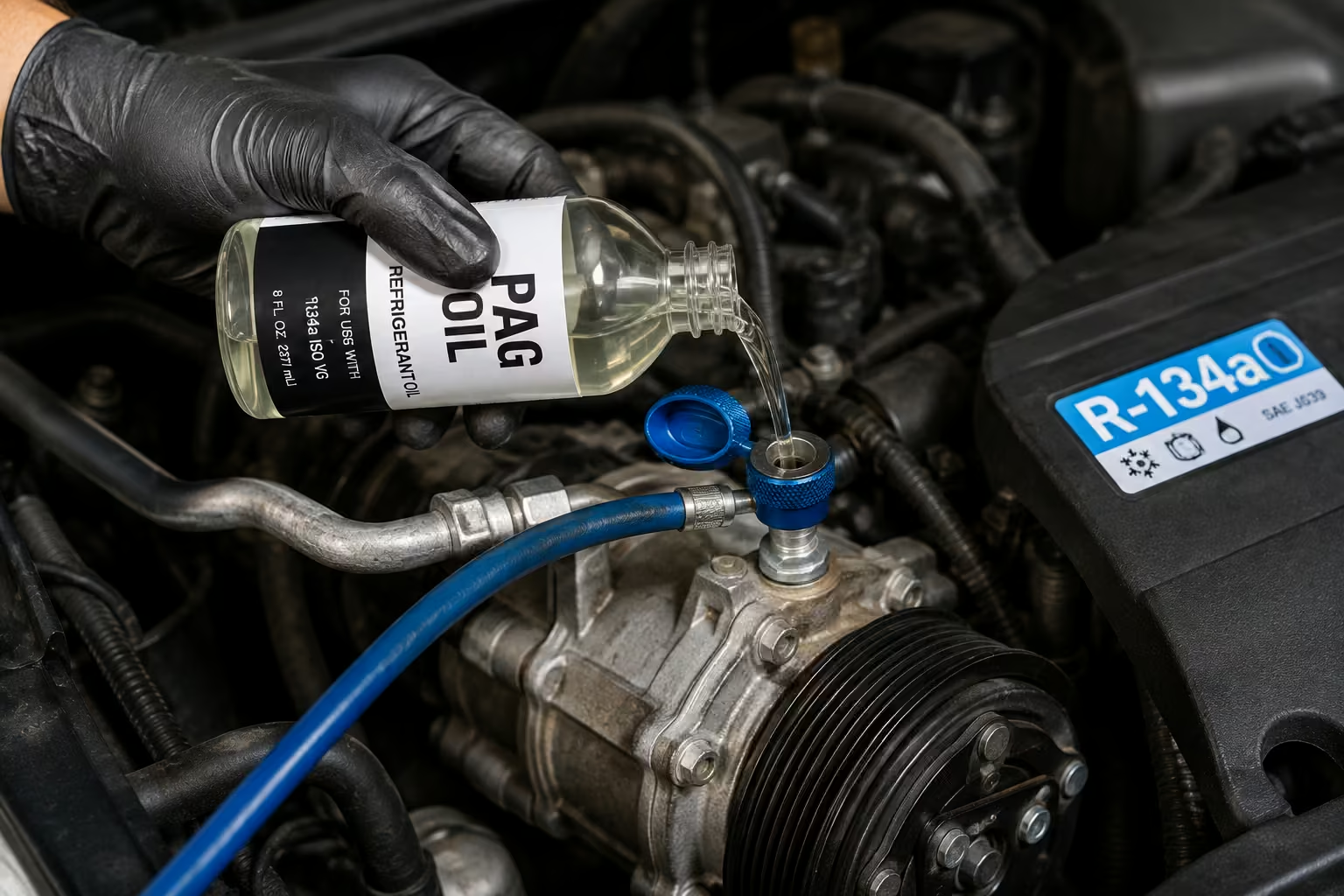
PAG oil, or polyalkylene glycol oil, was engineered specifically for automotive air conditioning systems running R-134a and, more recently, R-1234yf. Vehicle manufacturers standardized on PAG because it delivers strong lubrication performance under the wide temperature swings a car’s AC system experiences.
PAG oil comes in multiple viscosities, commonly labeled PAG 46, PAG 100, and PAG 150, and the correct viscosity depends entirely on the compressor manufacturer’s specification. Using the wrong viscosity will not destroy a compressor overnight, but it reduces lubrication efficiency and can shorten component life.
Note: PAG oil is specific to automotive R-134a and R-1234yf systems. Stationary or commercial R-134a equipment, such as chillers, does not use PAG oil — those systems are paired with POE oil instead, as noted in the POE Oil section above.
PAG Oil Viscosity Grades Explained
Most modern vehicles use PAG 46, which offers a balance of flow and film strength. Compressors that need more protection under load call for PAG 100’s thicker lubrication, while a smaller number of specialty applications reserve PAG 150. Always check the compressor label or manufacturer documentation before topping off a system, since mixing viscosities isn’t recommended.
Why PAG Oil Cannot Mix with POE Oil
PAG and POE oils are not interchangeable, and mixing them can cause the blend to become cloudy, separate, or lose lubrication properties. PAG oil is also more hygroscopic than POE, absorbing moisture even faster, so containers need to stay sealed just as strictly. Automotive technicians should always confirm which oil family a vehicle’s compressor was designed around before adding anything to the system.
Alkylbenzene Oil and Other Specialty Lubricants
Alkylbenzene oil, often shortened to AB oil, is a synthetic lubricant that predates POE but still shows up in certain retrofit and low-temperature applications. It mixes well with mineral oil, making it a useful bridge product when converting older R-22 systems, and it offers better refrigerant miscibility than mineral oil at low temperatures.
Polyvinyl ether, or PVE oil, is another specialty option gaining traction as an alternative to POE in some regions. It sits between PAG and POE in terms of moisture sensitivity, and like PAG, it resists the hydrolysis reaction that plagues POE oil when water gets involved.
When Alkylbenzene Oil Makes Sense
AB oil is most useful in transitional situations, such as retrofitting an R-22 system to a drop-in replacement refrigerant where full compressor replacement is not practical. It is compatible with the mineral oil already present, so a complete oil flush is not always required.
The Rise of PVE Oil in Newer Applications
PVE oil is increasingly common in certain automotive and light commercial applications where manufacturers want the low hydrolysis risk of PAG combined with broader refrigerant compatibility. It is still less common than POE overall, but its use is expected to grow as refrigerant blends continue evolving.
Matching Oil to Refrigerant: A Practical Reference
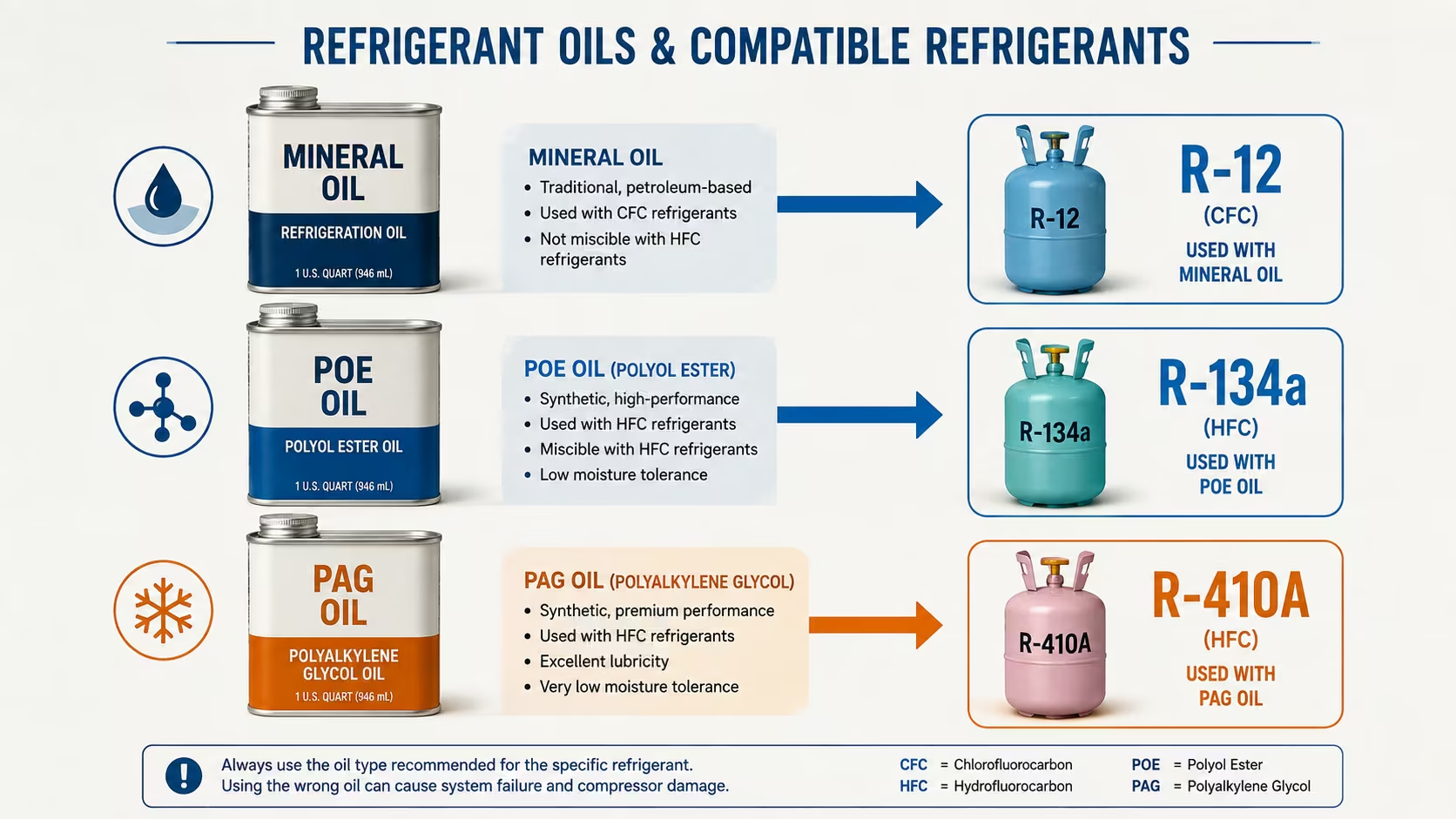
Getting the pairing right comes down to a few dependable rules technicians can memorize. R-12 and older R-22 equipment generally call for mineral oil or alkylbenzene oil. R-134a automotive systems need PAG oil at the manufacturer-specified viscosity. R-410A, R-404A, and most modern commercial HFC systems run on POE oil. R-1234yf systems typically use PAG oil formulated specifically for that refrigerant, though some manufacturers specify POE instead.
Always Verify with the Compressor Manufacturer
Published oil charts are a helpful starting point, but the compressor manufacturer has the final say. Every compressor design has slightly different tolerances, and manufacturers sometimes specify oils that differ from the general industry pattern. Skipping this verification step is one of the most common causes of premature compressor failure in the field.
Testing Oil Condition Before Reusing It
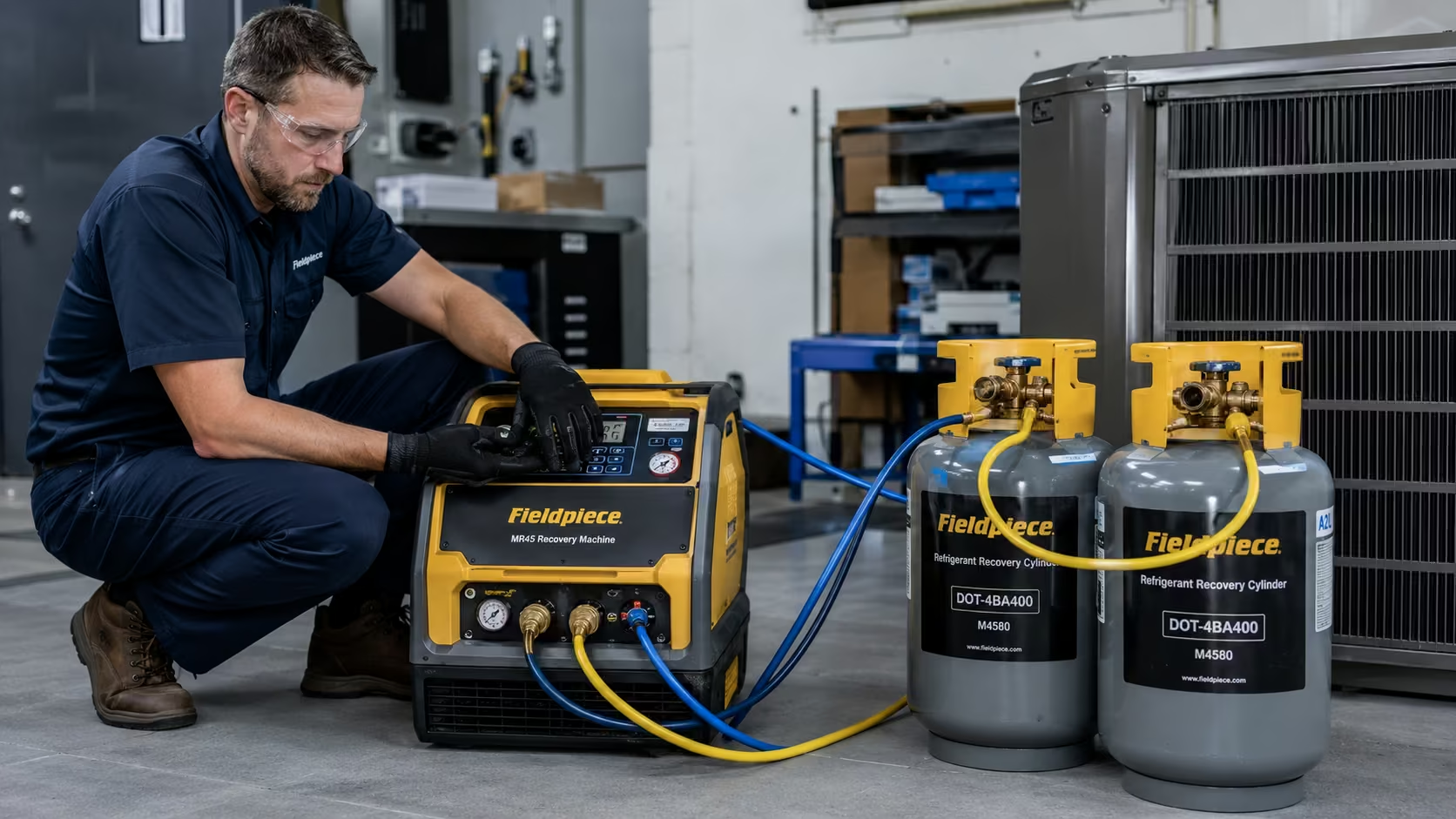
When servicing an existing system, technicians can send an oil sample out for spectrographic analysis to check for acid content, moisture, and metal particles that indicate internal wear. This kind of testing catches problems early, often before a compressor shows any outward symptoms of failure. For technicians who also handle refrigerant recovery during these service calls, understanding proper refrigerant recovery and recycling procedures pairs naturally with good oil management, since both protect the compressor and the environment at the same time.
Frequently Asked Questions
Can I mix POE oil and PAG oil in the same system?
No, POE and PAG oils should never be mixed. They can separate or lose lubrication properties, leading to poor oil return and compressor wear over time.
Is mineral oil still available to buy?
Yes, mineral oil is still sold and used, mainly for servicing older R-12 and R-22 equipment that was originally designed around it.
Why does POE oil absorb so much moisture?
POE oil has a polar molecular structure that attracts water molecules, which is part of what makes it miscible with modern HFC refrigerants, but it also makes moisture control essential.
What happens if I use the wrong viscosity of PAG oil?
The compressor will still run, but lubrication efficiency drops, which can accelerate wear on internal components over the vehicle’s lifetime.
Do all R-1234yf systems use PAG oil?
Most do, but some manufacturers specify POE oil instead, so the vehicle’s service manual should always be checked before adding oil.
How can I tell if refrigerant oil has moisture contamination?
A spectrographic oil analysis test can detect moisture content along with acid levels and metal particles, giving a clear picture of the oil’s condition.
Can alkylbenzene oil replace POE oil in an R-410A system?
No, alkylbenzene oil is not recommended for R-410A systems. POE oil remains the correct choice for that refrigerant.
How often should refrigerant oil be tested or replaced?
There is no universal schedule, but oil should be tested whenever a compressor is opened for service or when a system shows signs of reduced performance.
Conclusion
Matching the right refrigerant oil types to the right refrigerant protects the compressor, keeps the system efficient, and avoids expensive repeat service calls. Mineral oil belongs with older CFC and HCFC systems. POE oil dominates modern HFC equipment, and PAG oil remains the standard for automotive air conditioning. Alkylbenzene and PVE oils fill in the gaps for retrofits and specialty applications.
Getting this right the first time saves both the technician and the customer a lot of frustration down the road. Anyone unsure which oil their system needs should check the compressor manufacturer’s documentation before adding anything. For more guidance on keeping refrigerant systems running efficiently, explore the full range of technical guides available at Smart Refrigerants.