


Your car’s air conditioner blows warm air on a hot afternoon, and the shop tells you it needs a refrigerant recharge. Then they ask a question that catches you off guard: does your car use R-134a or R-1234yf? Getting this wrong is not a small mistake. The two refrigerants are not interchangeable, and putting the wrong one into your system can damage the compressor and cost you hundreds of dollars in repairs.
The good news is that figuring out which refrigerant your car uses, and understanding why there even are two different types, is easier than it sounds. This guide breaks down R-134a vs R-1234yf in plain language, covering how each one works, why the industry switched, and how to check which refrigerant belongs in your specific vehicle.
What Is R-134a Refrigerant?
R-134a became the standard automotive refrigerant in the mid-1990s, replacing the ozone-damaging R-12. It is a hydrofluorocarbon, often shortened to HFC, and it does not harm the ozone layer the way its predecessor did. That single change was a major win for the environment at the time it was introduced.
Even so, R-134a carries its own environmental baggage. It has a Global Warming Potential, or GWP, of roughly 1,430. That number means one pound of R-134a released into the air traps as much heat as 1,430 pounds of carbon dioxide. Millions of vehicles built before 2017 still rely on it every day.
How R-134a Works in Your Car’s AC System
R-134a cycles between liquid and gas inside your car’s AC loop. It absorbs heat from the cabin air, then releases that heat outside through the condenser. This cycle repeats constantly whenever the AC is running, pulling warm air out and pushing cool air in.
Why R-134a Became the Industry Standard
Automakers adopted R-134a because it was non-flammable, non-toxic, and far gentler on the ozone layer than R-12. It earned an ASHRAE A1 safety rating, the safest classification available. That safety profile made it an easy choice for a system that operates inches from passengers.
The Environmental Downside of R-134a
Despite its safety advantages, R-134a lingers in the atmosphere for roughly 13 years after a leak. Combined with its high GWP, regulators eventually decided the automotive industry needed something cleaner. That decision opened the door for R-1234yf.
What Is R-1234yf Refrigerant?
R-1234yf, formally known as HFO-1234yf, belongs to a newer chemical family called hydrofluoroolefins. Chemists designed it specifically to replace R-134a in car air conditioning systems. Automakers began installing it in new vehicles around 2013 and 2014.
The appeal of R-1234yf comes down to one number: a GWP of about 4. That is roughly 99.7 percent lower than R-134a’s environmental impact. It also breaks down in the atmosphere within about eleven days, compared to over a decade for R-134a.
The Chemistry Behind R-1234yf
R-1234yf is engineered to behave similarly to R-134a inside a compressor, which is why automakers could switch refrigerants without a total system redesign. However, it operates with slightly different pressures and requires its own dedicated service ports and tools.
Why Automakers Switched to R-1234yf
The European Union mandated low-GWP refrigerants in new vehicles starting in 2011, with a full transition required by 2017. The United States followed a similar path through fuel economy and emissions rules, and by 2021 the vast majority of new American vehicles used R-1234yf.
Is R-1234yf Safe?
R-1234yf carries an A2L rating, meaning it is mildly flammable under lab conditions. In practice, it requires a very high concentration to ignite, far beyond what a typical leak would produce. Automakers route AC lines away from heat sources, and major safety agencies have confirmed it is safe for everyday driving.
R-134a vs R-1234yf: Key Differences Compared
Once you understand what each refrigerant is, the real question becomes how they stack up side by side. The differences matter for your wallet, your car’s performance, and the environment. Here is how the two compare across the categories that matter most.
Neither refrigerant is simply “better” in every category. R-134a wins on cost and simplicity, while R-1234yf wins decisively on environmental impact. Your vehicle’s factory design determines which one you actually need, so the comparison is more about understanding trade-offs than picking a favorite.
Global Warming Potential and Environmental Impact
This is the starkest difference between the two. R-1234yf’s GWP of roughly 4 makes it hundreds of times less harmful to the climate than R-134a’s GWP of 1,430. This gap is the entire reason regulators pushed for the switch in the first place.
Cost and Availability
R-1234yf typically costs more per pound than R-134a, largely due to production complexity, patents, and a smaller supply chain. As adoption grows and more suppliers enter the market, that price gap has been gradually narrowing.
Performance and Cooling Efficiency
Drivers generally notice no difference in how cold their AC blows between the two refrigerants. Both are engineered to operate within a similar pressure envelope, so a properly serviced R-1234yf system cools just as well as an R-134a one.
Which Refrigerant Does Your Car Use?
You do not need to guess or open up your AC system to find this out. Every vehicle sold in North America and Europe carries a label that identifies its refrigerant type, along with the exact fill amount and oil specification.
Model year is also a strong clue, though it is not a guarantee on its own. Checking the label directly is always the safest way to confirm which refrigerant your specific vehicle requires before any service work begins.
How to Check Your Car’s AC Refrigerant Label
Look under the hood, usually on the underside of the hood itself or near the AC compressor. The label lists the refrigerant type, the required charge weight, and the compatible oil type. This sticker is the most reliable source of truth.
Model Years and Refrigerant Timeline
Most vehicles built before 2013 use R-134a. Vehicles built from roughly 2013 through today increasingly use R-1234yf, with nearly universal adoption in new US and EU models by 2021. Some manufacturers transitioned earlier or later than others, which is why the label matters more than the year alone.
What Happens If You Use the Wrong Refrigerant
Mixing R-134a and R-1234yf is not just against the rules in many regions, it can physically damage your system. The two use different oils, and cross-contamination can lead to compressor failure. A contaminated system typically needs to be fully recovered, flushed, and recharged correctly.
Servicing and Maintaining Your Car’s AC System
Regular AC maintenance keeps your system running efficiently and helps you avoid costly repairs down the road. The service process looks a little different depending on which refrigerant your vehicle uses, so it helps to know what to expect.
Both systems benefit from routine checks, especially before summer driving season. A shop familiar with both refrigerant types can spot early warning signs before a small leak turns into a major repair.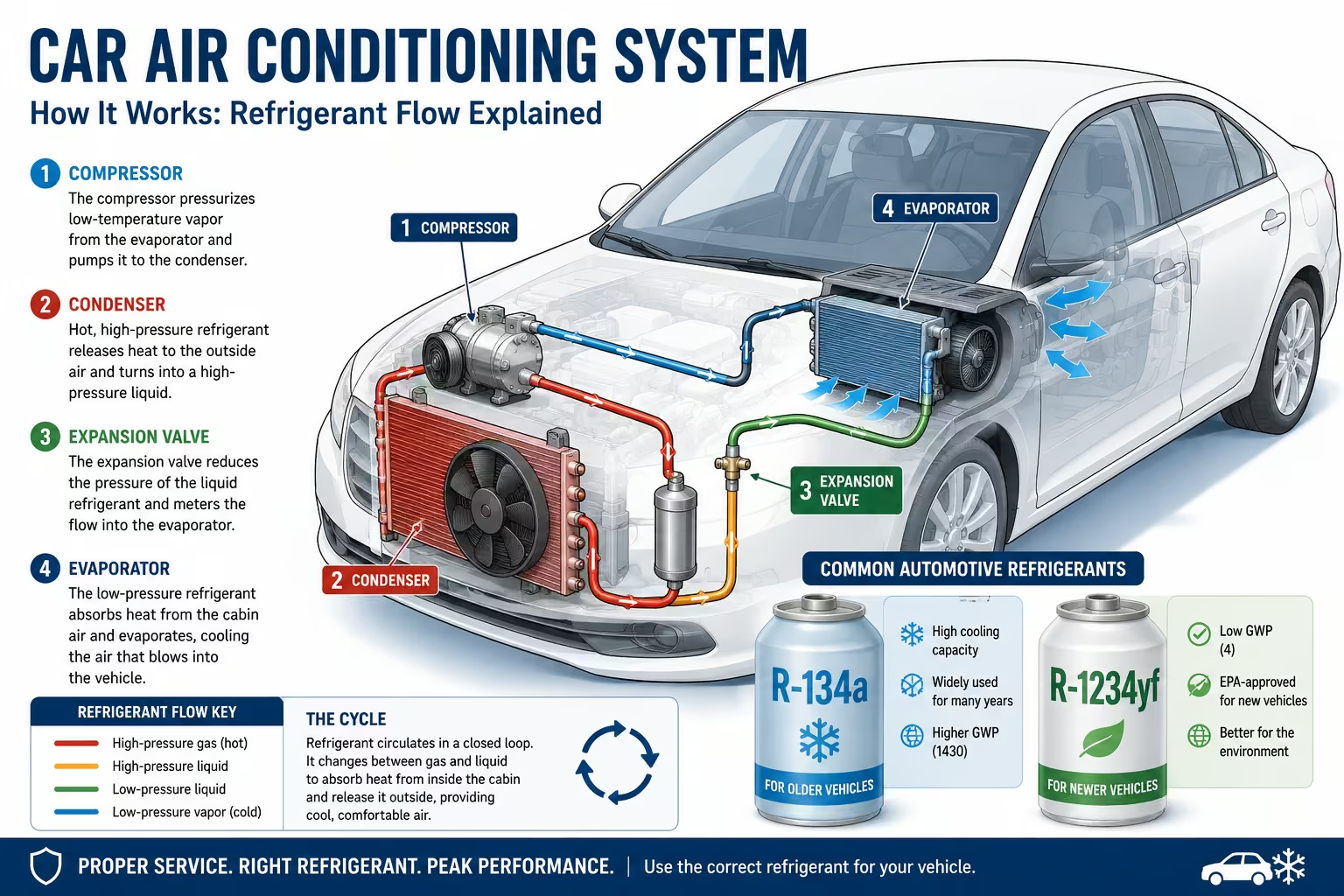
Recharging an R-134a System
R-134a systems use standard blue service couplers and widely available recovery equipment. Because R-134a has been the standard for decades, most shops carry the tools and refrigerant needed to service it without any special ordering.
Recharging an R-1234yf System
R-1234yf systems require dedicated tools, distinct service ports, and PAG 46 oil rated specifically for compatibility with the refrigerant. Standard R-134a oils should never be substituted, since doing so can compromise the compressor over time.
Signs Your AC System Needs Refrigerant
Warm air from the vents, a hissing sound near the dashboard, or visible oily residue around fittings are all common warning signs. A slow decline in cooling performance over several months often points to a small, gradual leak rather than a sudden failure.
The Future of Car Refrigerants
Refrigerant regulations continue to tighten worldwide as governments push for lower emissions across every industry, including transportation. Understanding where the industry is headed can help you make smarter decisions the next time you shop for a vehicle or a repair.
Tightening Global Regulations
The EU’s F-Gas Regulation and similar EPA rules under the AIM Act continue to phase down high-GWP refrigerants across many applications, not just passenger vehicles. R-134a remains legal for servicing older cars, but its role in new manufacturing keeps shrinking.
Emerging Alternatives Beyond R-1234yf
Researchers continue exploring natural refrigerants like R-744, also known as CO2, for future automotive systems. These alternatives promise even lower environmental impact, though widespread automotive adoption is still years away from becoming common.
Frequently Asked Questions
Can I mix R-134a and R-1234yf in the same system?
No. The two refrigerants use different oils and pressures, and mixing them can damage your compressor. A contaminated system must be fully recovered and flushed before it can be recharged correctly.
How do I know which refrigerant my car needs?
Check the label under your hood, usually near the AC compressor or on the hood’s underside. It lists the exact refrigerant type, charge amount, and required oil.
Is R-1234yf dangerous because it’s flammable?
It carries a mild A2L flammability rating, but real-world risk is very low. It takes a high concentration to ignite, and automakers design AC lines to avoid heat sources for extra safety.
Why does R-1234yf cost more than R-134a?
Production complexity, licensing, and a smaller supplier base all add to R-1234yf’s price. As more manufacturers produce it, the cost gap continues to shrink over time.
Can older cars be converted to use R-1234yf?
Technically possible, but rarely done in practice. It usually requires new components, different service ports, and compatible oil, which often makes conversion more expensive than simply servicing the original system.
Is R-134a being banned for car owners?
As of 2026, R-134a is not banned for servicing existing vehicles that originally used it. Regulations mainly target new vehicle manufacturing rather than existing car owners.
Does R-1234yf cool as well as R-134a?
Yes. Both refrigerants operate within a similar pressure range, so a properly serviced R-1234yf system cools just as effectively as one running R-134a.
What happens if my AC refrigerant runs low?
Low refrigerant usually means a leak somewhere in the system. Simply topping it off without finding the leak often leads to the same problem returning within weeks or months.
Conclusion
Choosing between R-134a and R-1234yf isn’t really a choice at all, since your vehicle’s factory design already decided it for you. What matters is knowing which one your car runs on, understanding why the industry shifted toward lower-GWP options, and recognizing that these two refrigerants should never be mixed.
Whether your vehicle relies on R-134a or R-1234yf, using the correct refrigerant and oil protects your AC system and keeps repair costs down. Check your under-hood label before your next service appointment, and make sure whoever recharges your system uses the exact refrigerant your car was built for.